
Pin presence, bent-pin and orientation rejection route
Best used when a buyer needs proof that small metal pins remain visible after fixture, height and reflection changes.
Electronics connector inspection 2-4 week sample-to-route planning window
Anonymized delivery case
Application brief for checking connector pin presence, orientation and bent-pin risk with camera, lens and controlled lighting. This route includes 3 measurable checks and 4 project evidence items.
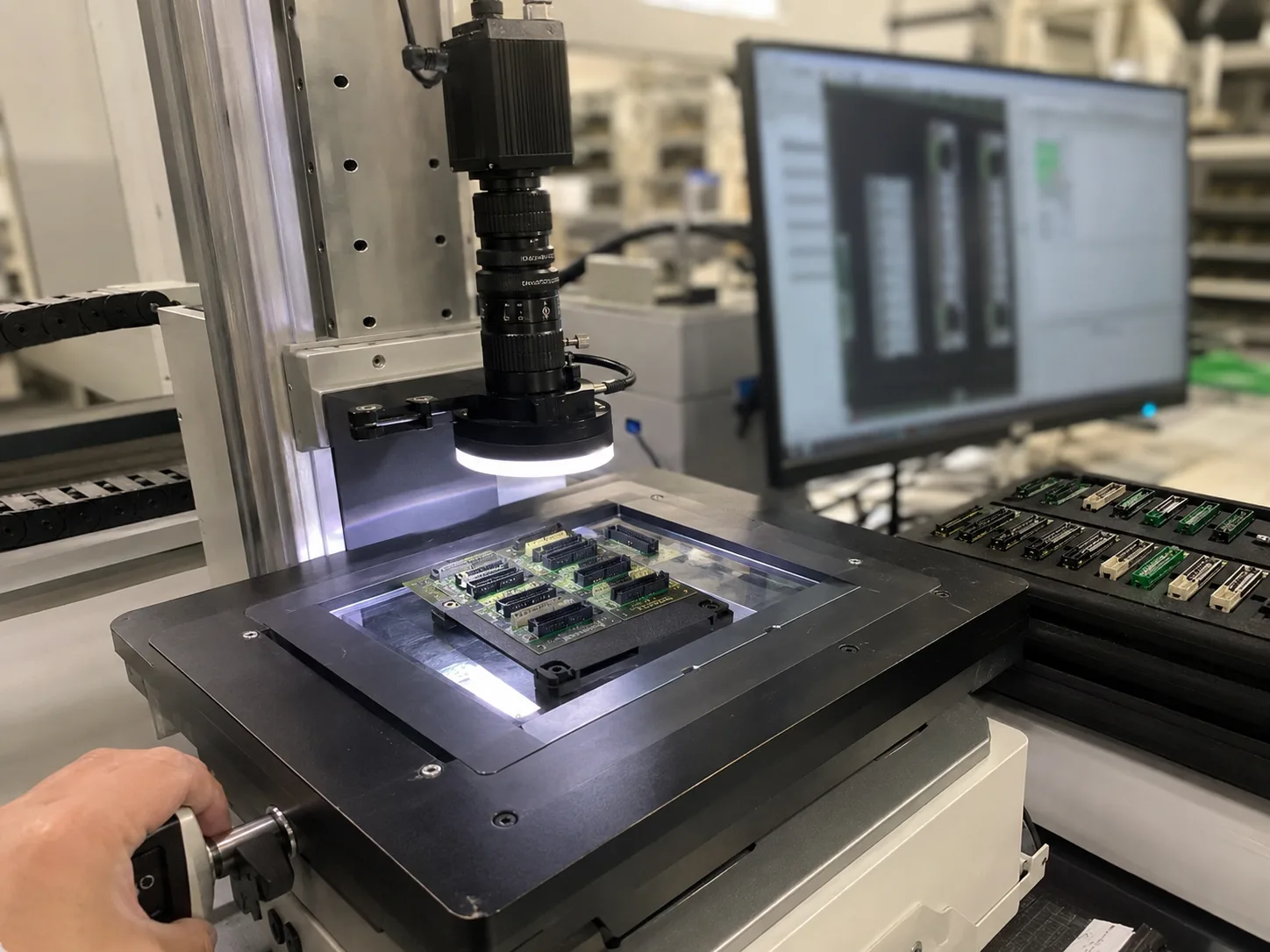
Best used when a buyer needs proof that small metal pins remain visible after fixture, height and reflection changes.
Small connector features require stable contrast, low distortion and repeatable part positioning before a pass/fail threshold can be trusted.
Use an industrial 2D camera with a telecentric or low-distortion lens, controlled coaxial or bar lighting and a fixture that stabilizes connector height.
20+ good and bad connector samples before threshold lock
Case decision frame
Anonymous cases are useful when they show the problem, constraints, hardware stack and evidence needed for a repeatable RFQ. Use these four fields to compare your project.
Small connector features require stable contrast, low distortion and repeatable part positioning before a pass/fail threshold can be trusted.
20+ good and bad connector samples before threshold lock 0 false-pass target on missing-pin golden samples
Industrial 2D camera + Telecentric or low-distortion lens + Coaxial / bar lighting + Stable connector fixture
Connector sample image set, Pin pitch and tolerance note, Lighting test comparison
Inspection workflow
The right product family depends on measurable samples, line conditions and acceptance criteria. Use this workflow to move from application idea to testable project evidence.
Trust evidence
Many inspection projects expose product defects, line speed and factory process details. Deyi Vision therefore publishes anonymized delivery evidence routes and keeps customer names, drawings and plant photos protected unless the buyer approves disclosure.
Related product families
Ring, bar, coaxial, dome, backlight, dark-field and line-light routes matched to defect contrast, edge clarity and part surface behavior.
Product routeTelecentric optical routes for precision measurement, low-distortion edge capture and repeatable gauge-style inspection.
Product routeArea-scan, USB3, GigE, global-shutter, high-speed, high-resolution and special-spectrum industrial cameras for machine vision.
Related solution and selection pages
Build automated visual inspection systems for defect detection, presence checks, surface inspection, orientation, measurement and repeatable pass/fail output.
SolutionPlan a complete vision inspection system for defect checks, presence, measurement, barcode reading and pass/fail output.
SolutionUse calibrated lenses, lighting and cameras to stabilize measurement under production conditions.
ResourceA production-focused explanation of how cameras, lenses, lighting, fixtures and reject logic become a repeatable inspection station.
ResourceFollow the machine vision workflow from trigger and image capture to lighting, processing, decision output and RFQ evidence.
ResourceUnderstand area scan cameras for indexed parts, snapshots, robot guidance, defect inspection and measurement tasks.
Application RFQ
Send sample images, line speed, tolerance and the current failure mode. We will map the application to camera, lighting, lens, reader, 3D or smart camera routes.
Request engineering RFQApplication FAQ
No. This page is an anonymized delivery evidence route for electronics connector inspection. It explains project type, hardware stack, sample evidence and measurable checks without claiming a named customer deployment.
Send connector sample image set, pin pitch and tolerance note, lighting test comparison, reject-output integration note. Include good and bad samples whenever possible so engineering can test the route before recommending hardware.
Industrial 2D Cameras, Telecentric Lenses, Machine Vision Lighting are the first product families to review, but the final route depends on sample images, speed, tolerance and installation space.
Send part photos or drawings, target defect or measurement goal, field of view, working distance, line speed, accuracy target, lighting limits and any current camera, lens, light, barcode reader or competitor model.
Use 2D when contrast, edges, labels or position are enough to judge the part. Use 3D when height, profile, gap, volume, weld shape or surface geometry decides pass or fail.
Start from the defect and material surface instead of the camera model. Backlight helps edge measurement, coaxial and dome lighting help reflective surfaces, and bar or ring lighting often works for general presence and defect checks.