Product route

Line Scan Cameras

Line scan camera routes for web inspection, roll-to-roll materials, high-speed conveyors and continuous production lines where area-scan coverage becomes inefficient.

The target moves continuously or is too wide/long for efficient area-scan coverageStart with web width, line speed, line rate, exposure, encoder and defect sizeArea scan for indexed snapshots
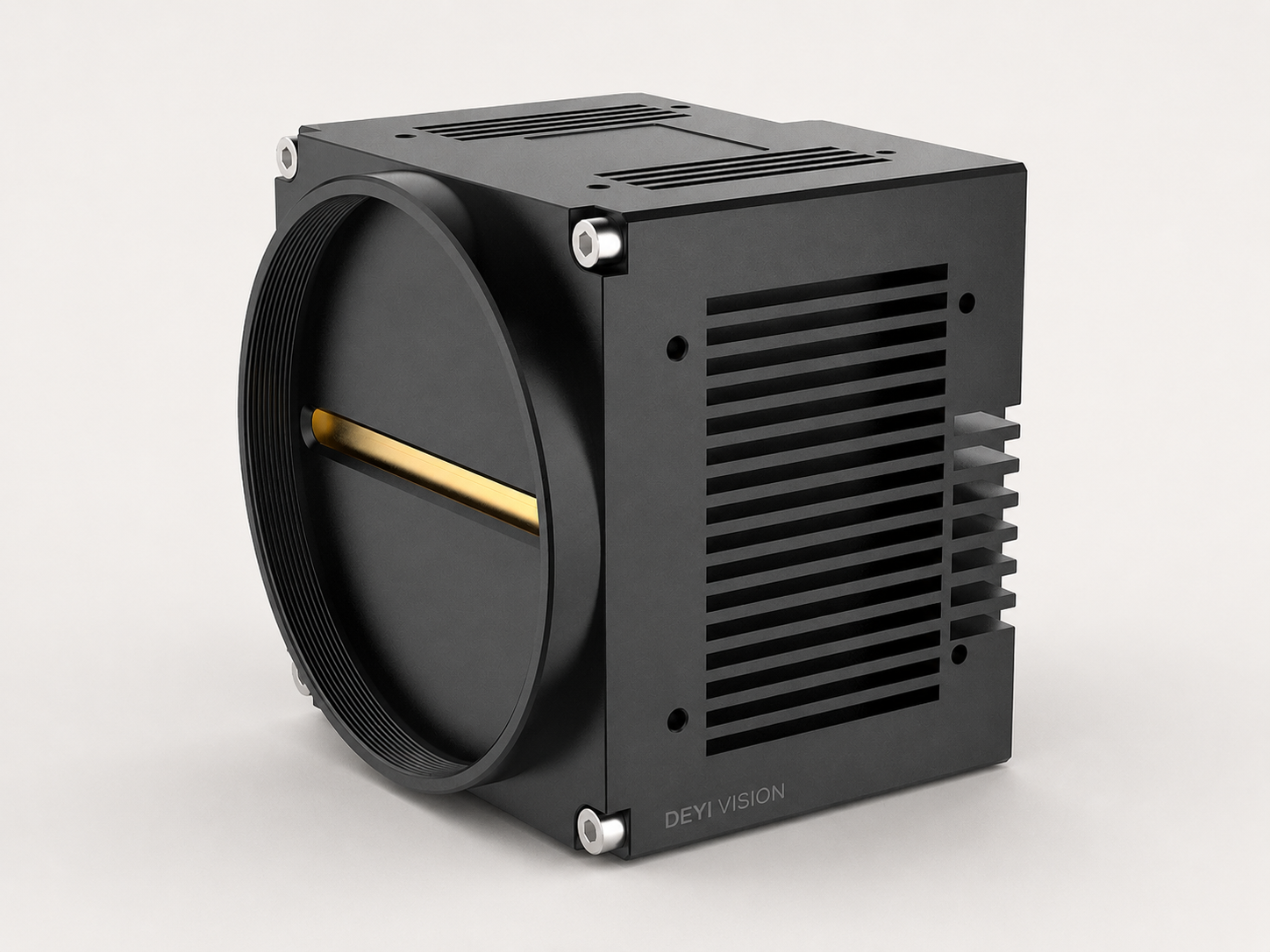
Line Scan Cameras product photo
Best-fit route

When to review line scan cameras.

The Line Scan Cameras route fits web inspection, continuous material scanning, high-speed surface checks, roll-to-roll inspection, film paper textile and metal strip inspection projects. Confirm material speed, web width and encoder strategy before camera selection.

Key parameters

Confirm these before model selection.

Line scan camera, Web inspection, Encoder-ready are only the starting point. Also confirm field of view, working distance, line speed, interface, trigger timing and mounting limits.

Evidence to prepare

Send evidence before asking for a part number.

Share sample images, good and bad parts, current reference model, target defect, tolerance, production speed and available fixture space.

When not to use this route

Use these limits before locking a model.

  • Do not use line-scan when encoder timing, web speed and lighting space are not available.
  • Do not replace area-scan with line-scan just for speed if the inspected field is small and stationary.
  • Do not lock the route before checking lens coverage, illumination uniformity and data throughput.
What engineering should confirm first

Send route evidence before asking for a final part number.

  • Part photos or short line video
  • Good and bad sample examples
  • Target feature size or tolerance
  • Field of view and working distance
  • Line speed, trigger and interface needs

When this route is a good fit

Line-scan cameras fit continuous material inspection; Deyi reviews line rate, web speed, encoder, lighting, lens and defect size before model selection.

Use RFQ checklist
Best-fit signals

Use this route when the project matches these constraints.

Use when
The target moves continuously or is too wide/long for efficient area-scan coverage.
Core numbers
Start with web width, line speed, line rate, exposure, encoder and defect size.
Route split
Area scan for indexed snapshots; line scan for continuous material coverage.
Selection risks to check

Do not quote this route before these checks are clear.

  • Do not quote line scan without encoder and motion stability details.
  • Do not assume more pixels solve blur if exposure and lighting intensity are wrong.
  • Do not omit edge-to-center light uniformity on wide materials.

Swipe horizontally to compare buyer situation, inspection constraint, recommended route and what to send.

Buyer situation Inspection constraint Recommended route What to send
line-scan review for continuous web, roll-to-roll and high-speed moving material Continuous-material inspection RFQ Primary line-scan route for continuous web, roll-to-roll and high-speed moving material. Send web width, line speed, smallest defect, encoder plan, material surface and lighting space.
Line-scan review for moving webs, long parts and continuous surfaces Moving-web inspection review Line-scan route for moving webs, long parts and continuous surfaces. Send web width, speed, smallest defect, encoder plan and material surface.
SWIR line-scan review when visible contrast cannot reveal coating or material differences Known-technology wavelength review SWIR line-scan review when visible contrast cannot reveal coating or material differences. Provide material, target defect, current wavelength test and sample images.
Camera, line light and encoder review for film, paper, textile or sheet materials Roll-to-roll application review Camera, line light and encoder route for film, paper, textile or sheet materials. Confirm roll width, web speed, defect size and line-light mounting space.
Price review depends on sensor length, line rate, interface, lens, line light and controller needs Scope and budget comparison Price route depends on sensor length, line rate, interface, lens, line light and controller needs. Provide target width, speed, defect size and whether the RFQ includes light, lens and encoder.
Encoder-synchronized review for stable geometry when material speed changes Encoder integration review Encoder-synchronized route for stable geometry when material speed changes. Confirm encoder availability, pulse rate, line speed variation and image scaling requirements.
Line-scan lens review matched to sensor length, pixel size and working distance Line-scan lens RFQ Line-scan lens route matched to sensor length, pixel size and working distance. Send camera sensor, field width, WD and required edge/defect resolution.

How buyers should compare this route

Build the product route around the inspection target, not the catalog model.

Open RFQ checklist
When this route is a good fit

Use line scan cameras when the inspection evidence matches the route.

Line Scan Cameras should be evaluated when the project is tied to web inspection, continuous material scanning, high-speed surface checks, roll-to-roll inspection, film paper textile and metal strip inspection. A useful review starts from the part behavior, target feature, motion condition and current failure mode, then maps those limits to the right component family instead of forcing one catalog model.

  • Web inspection
  • Continuous material scanning
  • High-speed surface checks
  • Roll-to-roll inspection
  • Film paper textile and metal strip inspection
How buyers should compare this route

Compare constraints, not only specifications.

Use line scan cameras selection as a system decision: lens, lighting, fixture, trigger, interface and software all affect repeatability. The safest shortlist is created only after sample images, line speed and output constraints are reviewed together.

  • Confirm material speed, web width and encoder strategy before camera selection.
  • Match line rate, exposure, lens field width and lighting intensity together.
  • Use line-scan routes when area-scan coverage, speed or image stitching becomes inefficient.

What engineering should confirm first

Four checks before locking the line scan cameras route.

This workflow keeps the RFQ focused on the real inspection constraint and reduces the risk of buying a component that works on paper but fails under production lighting, motion or fixture variation.

  1. Define the inspection target State the defect, code, edge, height, presence check or measurement result that must be accepted or rejected.
  2. Lock optical and mechanical constraints Confirm field of view, working distance, mounting space, part motion, fixture stability and available light geometry.
  3. Match the component route Review line scan cameras with related lenses, lighting, controllers, I/O and software rather than selecting one part number in isolation.
  4. Validate with samples Use good parts, bad parts and edge-case samples to confirm contrast, repeatability, read rate or measurement stability before purchase.

Reviewed selection basis

Review model data, buyer constraints and acceptance risk before RFQ lock.

Manufacturer seriesLine scan camera series Selection basisMindVision line-scan and high-speed camera selection route Model routeDeyi-supported model route Buyer reference modelBasler / Teledyne DALSA / Hikrobot
Quote variables

What changes the route, cost and delivery review.

Application route
Web inspection, Continuous material scanning, High-speed surface checks, Roll-to-roll inspection, Film paper textile and metal strip inspection
Hardware scope
Line scan camera, Web inspection, Encoder-ready
Buyer reference model
Basler / Teledyne DALSA / Hikrobot
Risk checks

Common reasons product selection goes wrong.

  • Choosing by resolution, catalog size or brand reference before defining the inspection target.
  • Ignoring lighting, lens, fixture or trigger limits that decide whether the component can repeat on the production line.
  • Requesting a quote without good/bad sample images, line speed, target tolerance or the current failure mode.
Evidence to prepare

Evidence that helps engineering reply faster.

Part photos or short line videoGood and bad sample examplesTarget feature size or toleranceField of view and working distanceLine speed, trigger and interface needsCurrent model, competitor reference or failure mode

Related solution routes

Connect this product family to an inspection problem.

View all solutions

Application case briefs

See how this product family appears in real inspection scenarios.

View all case briefs

Related buying guides

Use these guides to validate the product route before RFQ.

View all resources

Reference alternatives

Compare this product family against reference-model requirements.

View all comparisons

Product RFQ

Need help selecting line scan cameras?

Send working distance, target size, speed, defect type, competitor model or sample images before locking a part number.

Request engineering RFQ

Product FAQ

Common questions before selecting line scan cameras.

Ask engineering
How do I confirm whether line scan cameras fit my project?

Start with the inspection goal, field of view, working distance, line speed and target tolerance. Then match line scan cameras with lens, lighting, mounting and I/O requirements instead of choosing by part number alone.

What information improves line scan cameras selection accuracy?

Send good and bad sample images, target feature size, field of view, working distance, speed, trigger method, interface requirement and any current reference model. That lets engineering confirm whether line scan camera is the right route or whether another product family is safer.

When should I avoid selecting line scan cameras by catalog specs only?

Avoid catalog-only selection when the part is reflective, moving quickly, tolerance-sensitive, space-limited or already failing under manual inspection. In those cases, lighting, lens, fixture and software behavior often matter as much as the component specification.

What information should I send before requesting a machine vision quote?

Send part photos or drawings, target defect or measurement goal, field of view, working distance, line speed, accuracy target, lighting limits and any current camera, lens, light, barcode reader or competitor model.

Do I need a 2D or 3D machine vision system?

Use 2D when contrast, edges, labels or position are enough to judge the part. Use 3D when height, profile, gap, volume, weld shape or surface geometry decides pass or fail.

How should I choose machine vision lighting?

Start from the defect and material surface instead of the camera model. Backlight helps edge measurement, coaxial and dome lighting help reflective surfaces, and bar or ring lighting often works for general presence and defect checks.

Contact

Direct RFQ contact

Talk to engineering about the inspection problem.

Send sample images, competitor model, FOV, working distance and line speed before model selection.

Target: selection brief within 24h
Send sample images