Basics

How Does a Machine Vision System Work?

Follow the machine vision workflow from trigger and image capture to lighting, processing, decision output and RFQ evidence.

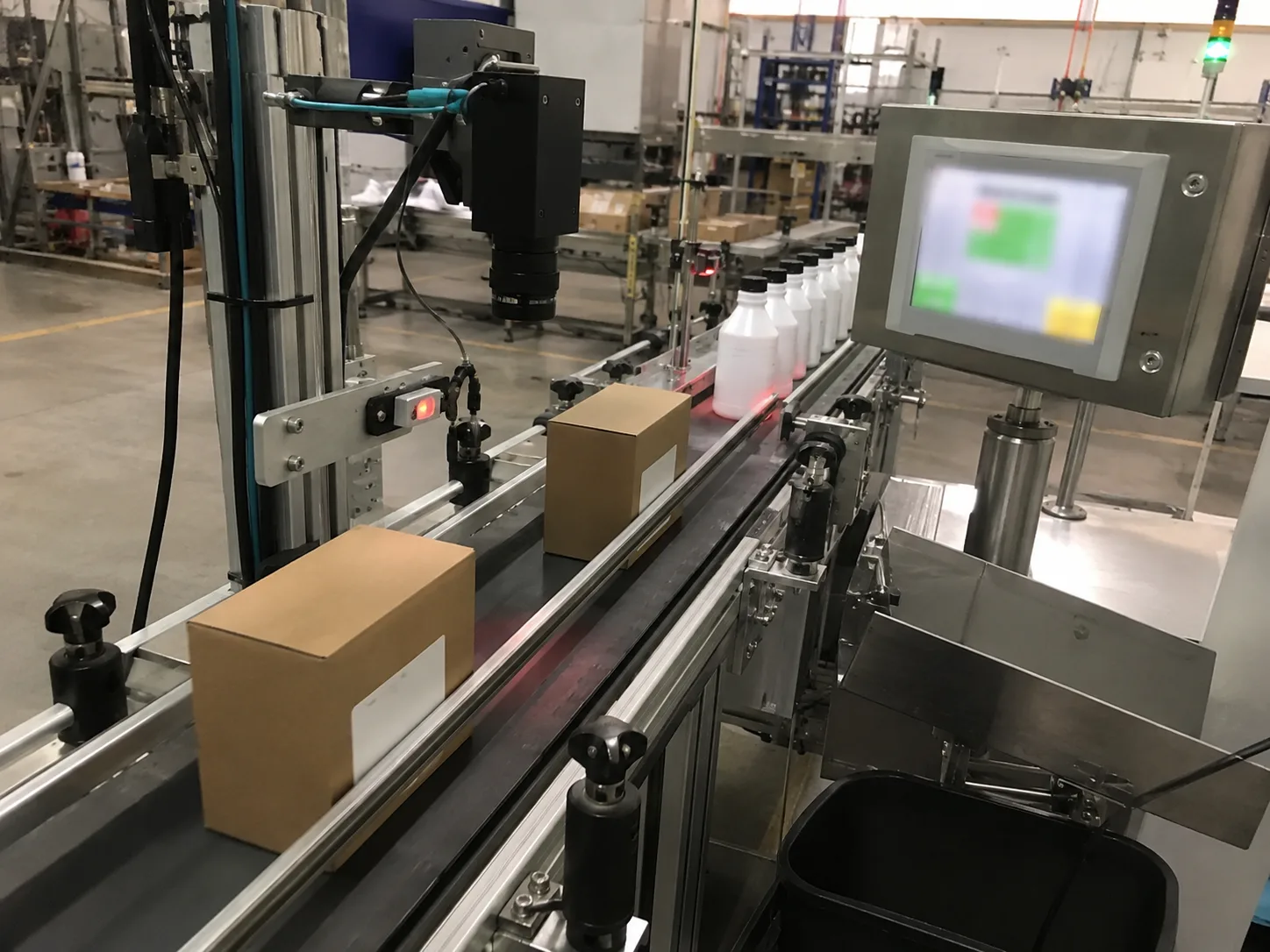
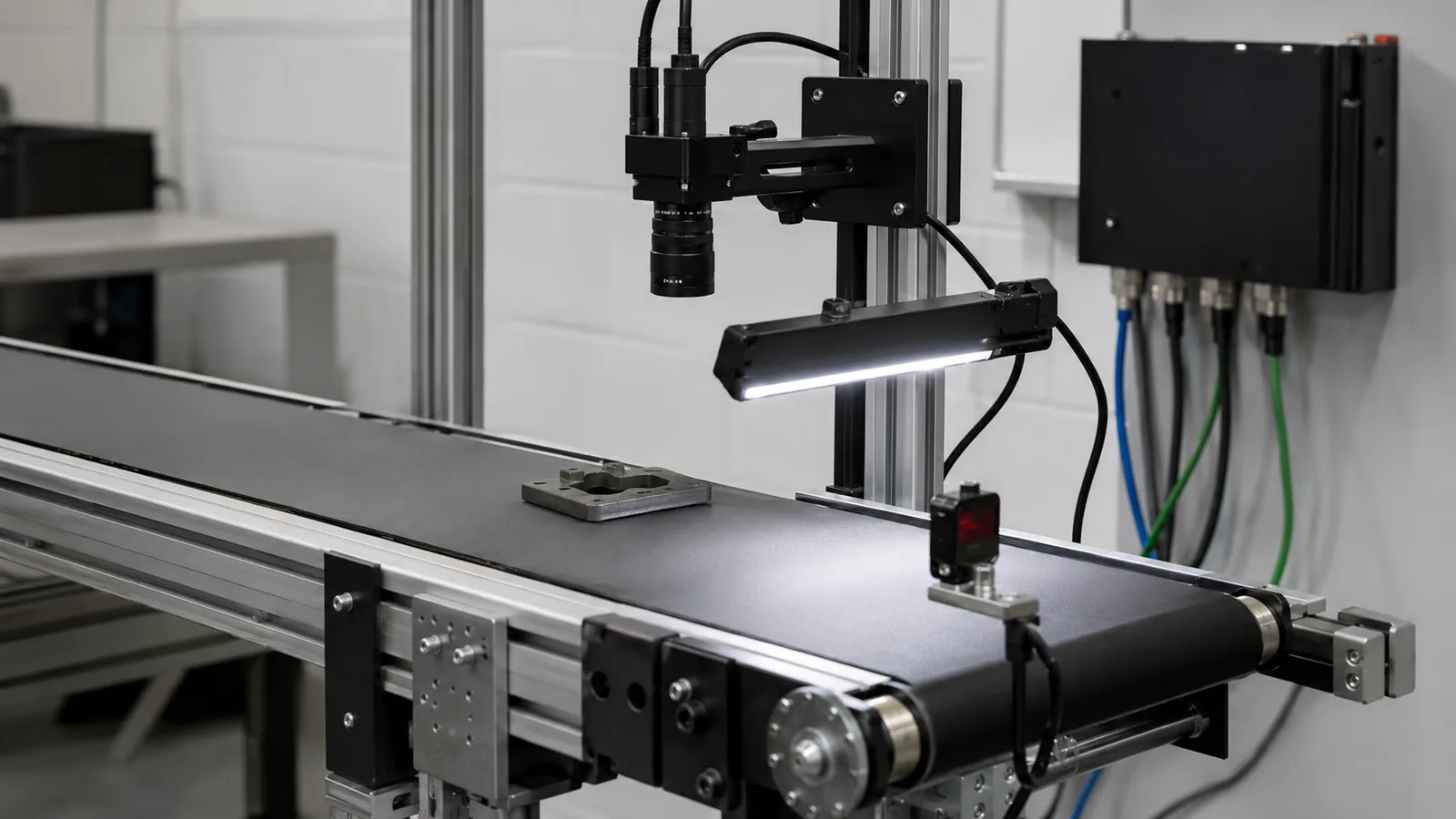
Automated visual inspection station showing how a machine vision system works

Direct answer

How Does a Machine Vision System Work?

A vision system captures 1 image or profile, normalizes lighting, runs inspection logic and sends pass/fail I/O. Most RFQs need 5 inputs: FOV, working distance, speed, tolerance and sample images.

Quick answer

What is the short answer for how does a machine vision system work??

A vision system captures 1 image or profile, normalizes lighting, runs inspection logic and sends pass/fail I/O. Most RFQs need 5 inputs: FOV, working distance, speed, tolerance and sample images.

Quick answer

What should be confirmed before RFQ?

5 RFQ inputs make selection clearer: FOV, working distance, speed, tolerance and samples.

Quick answer

What evidence should Deyi Vision review?

Lighting and fixture stability often matter more than extra software rules.

Key takeaways

What this page should help engineering teams decide.

  • The workflow starts with a trigger and ends with output to PLC, robot, database or operator.
  • 5 RFQ inputs make selection clearer: FOV, working distance, speed, tolerance and samples.
  • Lighting and fixture stability often matter more than extra software rules.
Key point

The trigger defines when the system looks.

A sensor, encoder, PLC signal or software event tells the camera when to capture the image. Bad trigger timing can blur, miss or misplace the part before inspection begins.

Key point

Lighting creates the inspection signal before software.

The best algorithm cannot recover a weak image. Ring, bar, dome, coaxial and backlight routes are chosen to make the defect or edge visible before processing.

Key point

The output must match the production decision.

A system can send pass/fail, measurement values, read results, coordinates or reject signals. Define the output format before choosing camera, smart camera or PC-based architecture.

Selection framework

Use this guide as a pre-RFQ decision filter, not as a part-number shortcut.

Machine vision selection is usually stable when the project starts from the inspection condition instead of a catalog model. Before requesting a quote, define what must be detected or measured, how the part moves, what surface behavior affects contrast and which factory constraint cannot change.

For how does a machine vision system work?, the engineering team should translate the requirement into testable inputs: sample images, target tolerance, line speed, field of view, working distance, mounting envelope and the current failure mode. That gives the factory enough evidence to map the request to camera, lighting, optics, reader or 3D routes.
Decision matrix

Three checks before locking the route.

01

Capture

Trigger 1 image, line profile or code-read event at the right part position.

02

Processing

Match algorithm complexity to smart camera or PC-based control.

03

Output

Choose I/O, Ethernet, serial, robot or database output.

Comparison table

Use these data points to turn the concept into an RFQ-ready decision.

Factor Practical rule RFQ impact
Capture Trigger 1 image, line profile or code-read event at the right part position. Share line speed and trigger method.
Processing Match algorithm complexity to smart camera or PC-based control. List how many cameras and decisions are needed.
Output Choose I/O, Ethernet, serial, robot or database output. Confirm integration target before model selection.

Common mistakes

Problems that slow down selection.

  • Selecting by model number before the inspection target is measurable.
  • Treating lighting as an accessory instead of the main contrast-control tool.
  • Ignoring fixture stability, part variation and operator maintenance workflow.

Factory handoff

What Deyi Vision reviews after receiving the project details.

The factory route review starts by checking whether the image can be made stable with lighting and fixture control. Then the camera, lens, reader or 3D sensor route is sized against speed, resolution, interface and installation constraints.

If you already have a Keyence, Cognex, Basler, OPT, LMI, Hikrobot or barcode-reader reference, include it as a benchmark. Deyi Vision uses the reference to understand the application class; final selection still depends on real samples and production limits.

Guide to RFQ

Have a real part, sample image or production constraint?

Use the guide to frame the question, then send the details so engineering can recommend a route.

Request engineering RFQ

Guide FAQ

Questions related to how does a machine vision system work?.

Ask engineering
What happens first in a machine vision system?

The first step is usually a trigger event that tells the camera when to capture. Trigger timing must match part position, exposure and motion speed.

Why is lighting important in machine vision?

Lighting controls contrast. It makes edges, defects, printed codes or surface marks visible so the camera and software can make a stable decision.

What information should I send before asking for a vision system quote?

Send FOV, working distance, line speed, tolerance, sample images, good and bad examples, output requirements and any current reference model.

Catch Defects First