Inspection solution

Robot Guidance

Vision routes for pickup, positioning, alignment and assembly verification.

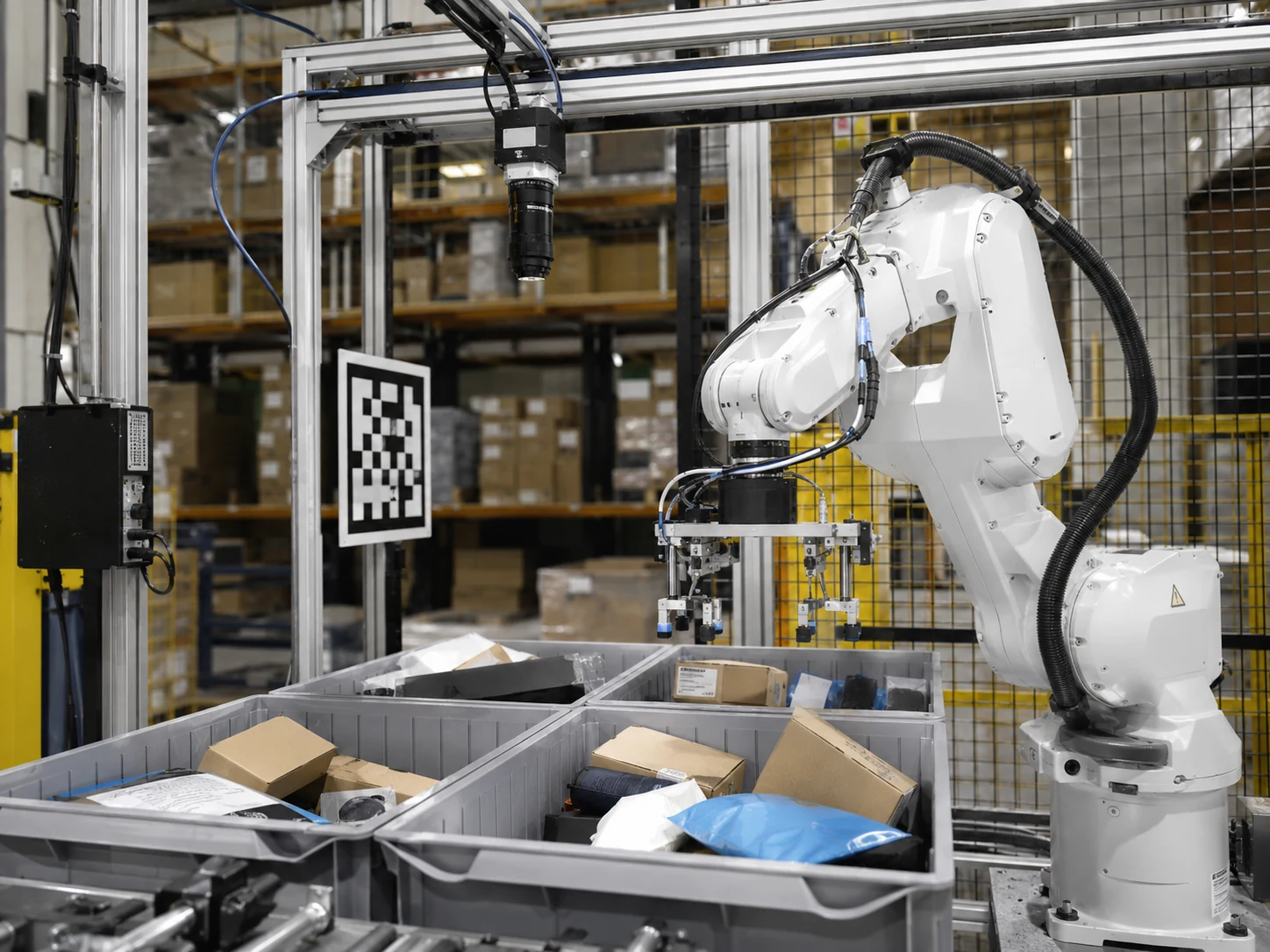
Real robot guidance vision cell with camera and robot arm

Engineering route fit

Guidance robot projects need coordinate evidence before camera selection.

A guidance robot search usually means the buyer needs vision coordinates for pick, place, alignment or assembly verification. Deyi checks part presentation, height variation, calibration workflow, lighting and robot interface before choosing 2D or 3D vision.

  • Coordinate targetPickup point, tolerance and robot handoff format.
  • Variation samplePart overlap, rotation, height and surface changes.
  • Route split2D for stable flat pickup, 3D when height or overlap changes the result.
Production pain points

Problems this route should solve.

  • Parts arrive with position variation
  • Robot pickup requires stable coordinates
  • Assembly needs verification before downstream steps

Repeated recalibration can hide a bad TCP or a wrong picking plane. Separate image localization, coordinate transformation and gripper mechanics. Use the robot’s authorized commissioning procedure for physical movements.Diagnose pick offsets through frames, TCP and part height

Solution RFQ

Planning a robot guidance project?

Send part images, line speed, inspection tolerance and current failure mode. We will map it to a component route.

Request engineering RFQ

Solution FAQ

Questions to answer before building a robot guidance route.

Ask engineering
Why does the robot pick a part in its reference orientation correctly but miss after it rotates?

Separate image localization, coordinate transformation and gripper mechanics. Recheck a fixed target at permitted tool angles and heights and note whether the error rotates with the tool. Check frames and TCP before changing calibration; do not hide the cause with arbitrary offsets.

Are camera calibration, hand-eye calibration and TCP setup the same task?

No. Camera calibration relates image geometry to the declared measurement setup; hand-eye calibration relates camera and robot coordinates; TCP describes the tool reference. Verify each applicable transform and picking plane in the actual fixed- or moving-camera configuration.

Does a low calibration residual prove reliable pickup?

No. A fitted residual describes the calibration data, not complete pickup performance. Check independently taught references, positions, angles, allowed heights and actual gripping under the intended conditions; recognition alone does not establish pick accuracy.

Does sending vision coordinates mean the vision system controls the robot path?

Not necessarily. Define which device handles coordinates, motion planning, gripper actions, readiness, results and faults. Confirm the exact robot and interface, and test the agreed sequence; a position message alone does not define path control or safe motion.

What should a robot-guidance acceptance test include?

Use identified parts and independent references across the allowed positions, orientations and heights. Record localization, transformed coordinates, actual pickup and failed-pick recovery separately. Follow the authorized commissioning procedure and agree limits before testing, rather than judging success from a clear preview image.

Continue troubleshooting

Contact

Direct RFQ contact

Talk to engineering about the inspection problem.

Send sample images, competitor model, FOV, working distance and line speed before model selection.

Target: selection brief within 24h
Send sample images