Selection Guides

Machine Vision System Components

Break down cameras, lenses, lighting, controllers, software, I/O and fixtures in an industrial vision system.

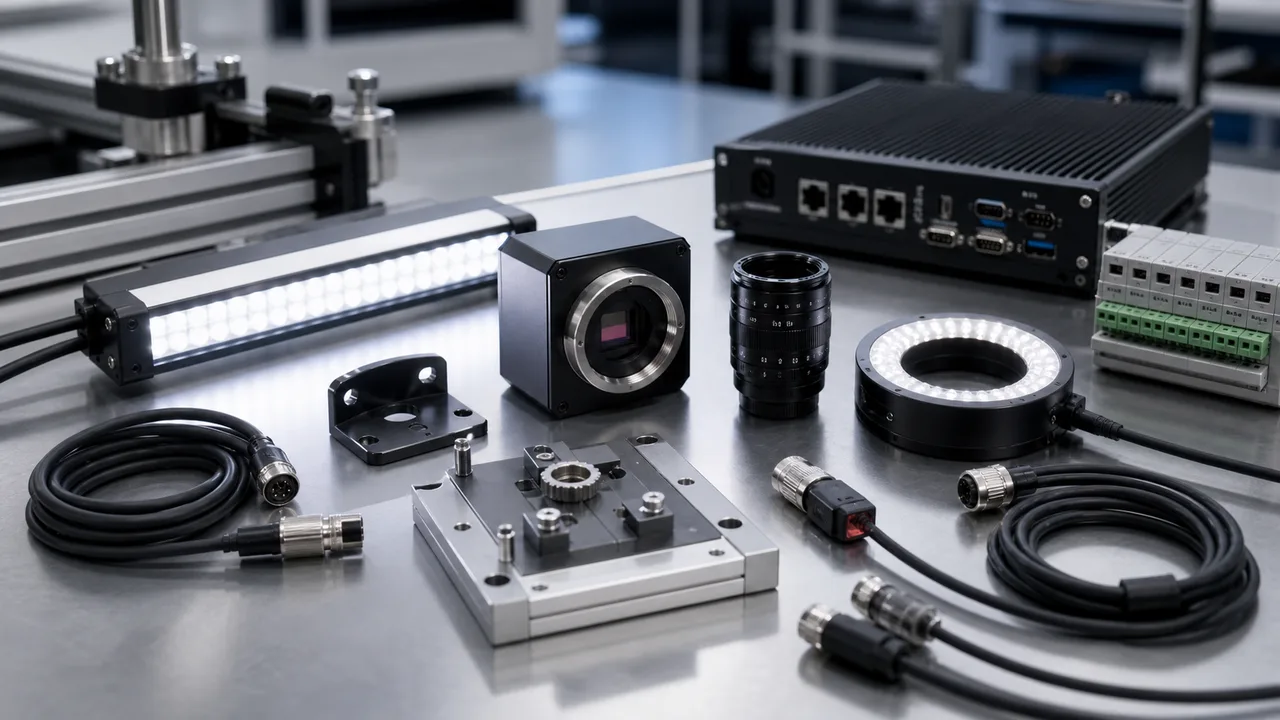
Machine vision system components bench with camera lens lighting controller trigger sensor cables and fixture

Direct answer

Machine Vision System Components

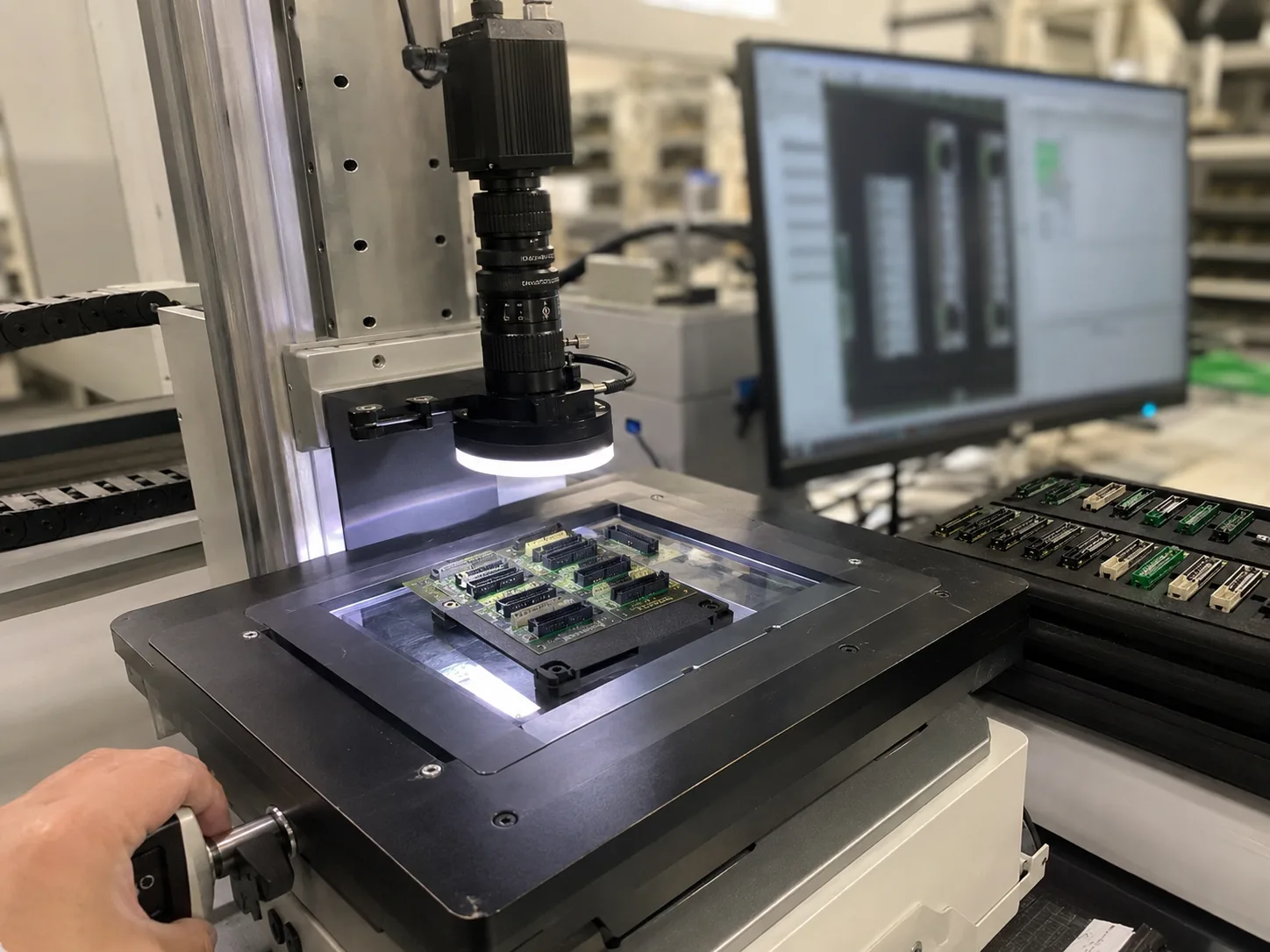
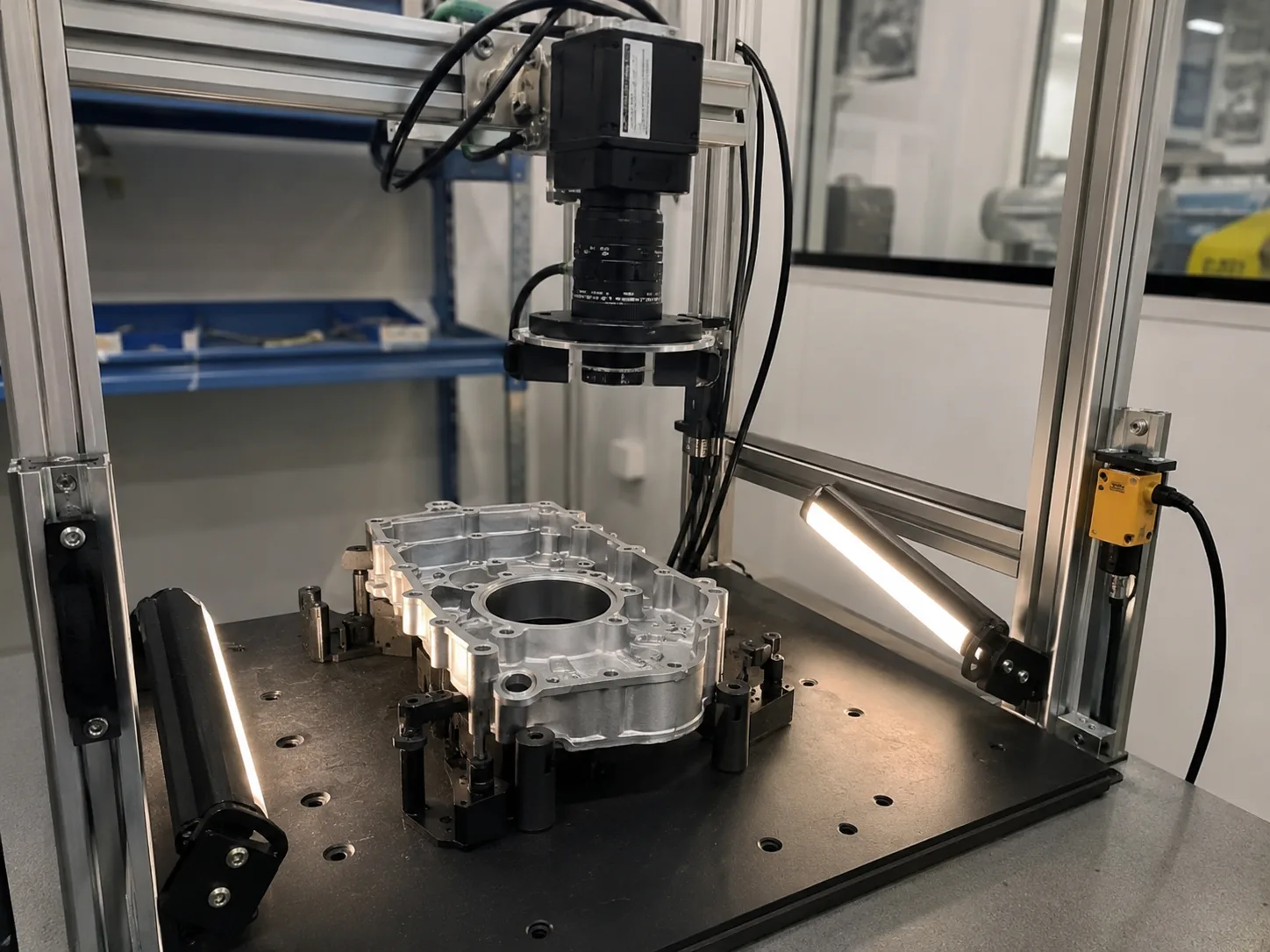
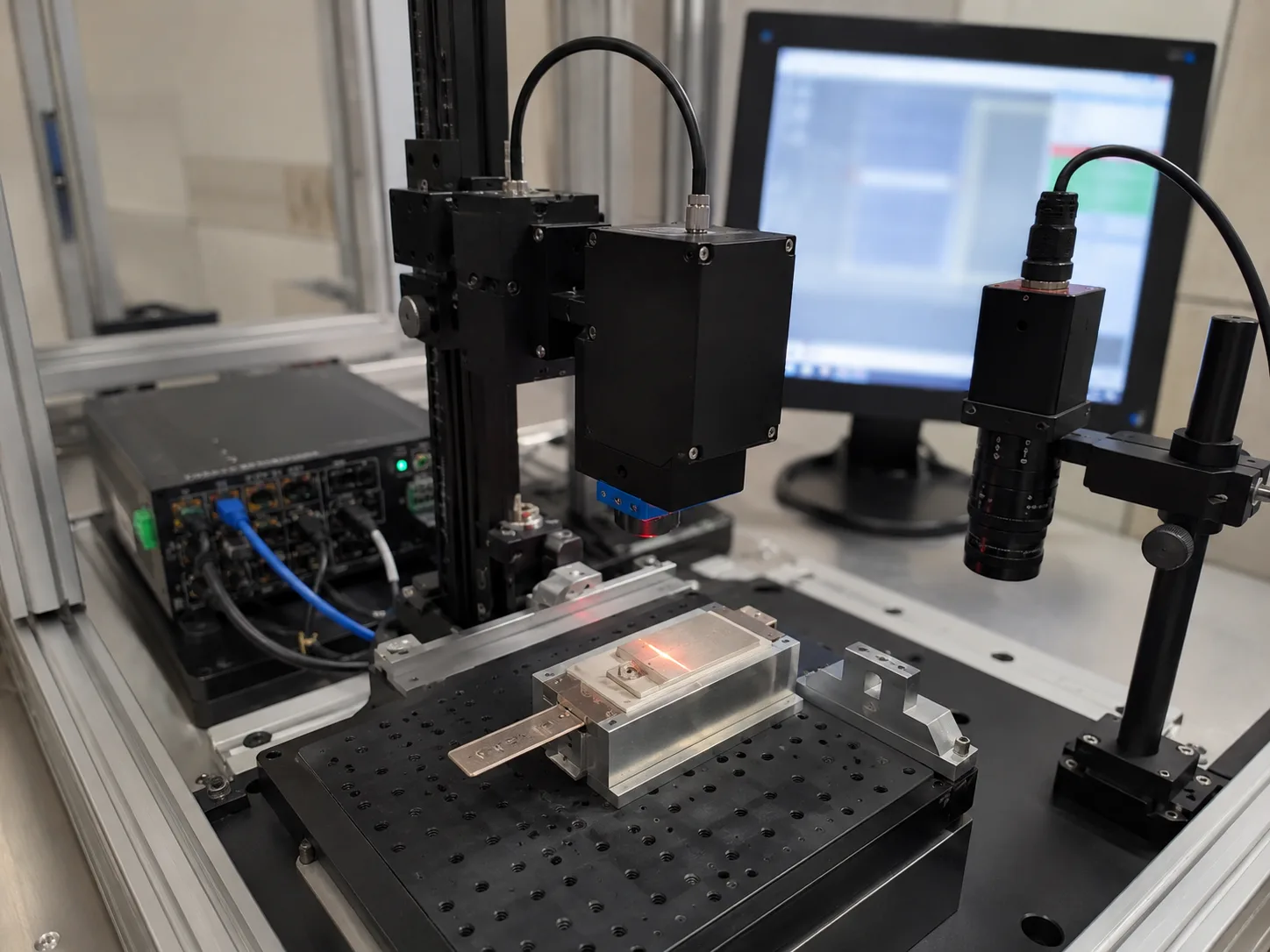
A machine vision system is a signal chain: fixture and trigger present the part, lighting creates contrast, lens and camera capture evidence, software makes the decision, and controller/I/O sends the result. Weakness in one component can make the whole station unreliable.

Where this matters

A vision system is a production decision chain.

The station only works when fixture, trigger, lighting, lens, camera, software and I/O all support the same pass/fail, measurement, code or coordinate decision.

Why projects fail

Systems fail when one component is treated as separate.

A camera-only quote can look correct but fail when lighting, lens distance, part presentation, trigger timing or reject output is not reviewed with the rest of the cell.

RFQ preparation

Send the complete station context.

Provide target feature, good/NG samples, FOV, working distance, tolerance, line speed, trigger method, output protocol and maintenance expectations.

What engineering should check

What this page should help teams decide.

  • The system fails if one component is mismatched.
  • Lighting and fixture design are as important as the camera.
  • RFQ should include line speed and inspection tolerance.
Practical note

Start from the production decision.

The component list changes depending on whether the station must detect a defect, measure a dimension, read a code, guide a robot or output coordinates. A clear pass/fail or measurement rule prevents catalog-only component selection.

Practical note

Camera, lens and lighting are one imaging route.

Resolution alone does not create a stable image. Sensor size, lens focal length, aperture, working distance, light angle, exposure and surface behavior should be evaluated together with sample parts.

Practical note

Trigger, fixture and I/O decide production repeatability.

A sharp bench image can fail in production if the part is not positioned repeatably, the trigger window is wrong or the PLC output is undefined. Mechanical and electrical details are part of the vision system, not afterthoughts.

Practical note

Software scope should match maintenance capability.

A smart camera may be enough for a contained inspection. A PC-based system is safer for multi-camera logic, image storage, heavier algorithms or MES/database handoff. The architecture should fit both inspection complexity and maintenance staff.

How to test before buying

Test the route as a station, not as isolated parts.

Before purchase, validate the sample image, fixture, light, exposure, trigger and output logic together. The final result should be a repeatable production decision, not only a clean demo image.

Decision checks

Three checks before locking the route.

01

Camera

Select by FOV, smallest feature, speed, shutter type and interface.

02

Lens

Match sensor size, working distance, field of view and distortion requirement.

03

Lighting

Choose by material, defect contrast, reflection and installation space.

Decision table

Use these data points to turn the concept into an RFQ-ready decision.

Factor Practical rule RFQ impact
Camera Select by FOV, smallest feature, speed, shutter type and interface. Send FOV, feature size, line speed and trigger method.
Lens Match sensor size, working distance, field of view and distortion requirement. Prevents selecting a camera that cannot be used with practical optics.
Lighting Choose by material, defect contrast, reflection and installation space. Send good/bad samples and current glare or shadow failures.
Controller and software Choose smart camera, embedded controller or PC by algorithm, I/O and data needs. Clarifies integration scope before quotation.
Fixture and trigger Stabilize part position and capture timing before tuning thresholds. Reduces commissioning changes after hardware purchase.

Application proof

Related delivery routes that make this selection decision concrete.

View all cases

Common mistakes

Problems that slow down selection.

  • Selecting by model number before the inspection target is measurable.
  • Treating lighting as an accessory instead of the main contrast-control tool.
  • Ignoring fixture stability, part variation and operator maintenance workflow.

Factory handoff

What Deyi Vision reviews after receiving the project details.

The factory route review starts by checking whether the image can be made stable with lighting and fixture control. Then the camera, lens, reader or 3D sensor route is sized against speed, resolution, interface and installation constraints.

If you already have a Keyence, Cognex, Basler, OPT, LMI, Hikrobot or barcode-reader reference, include it as a reference model. Deyi Vision uses it to understand the application class; final selection still depends on real samples and production limits.

Guide to RFQ

Have a real part, sample image or production constraint?

Use the guide to frame the question, then send the details so engineering can recommend a route.

Request engineering RFQ

Guide FAQ

Questions related to machine vision system components.

Ask engineering
What are the main components of a machine vision system?

The main components are camera, lens, lighting, trigger sensor, controller or software, I/O, cables, fixture and the inspection logic that defines the output.

Which component should be selected first?

Select the inspection requirement first. After FOV, defect, speed, tolerance and output are clear, camera, lens and lighting can be chosen as one route.

Why do machine vision systems fail after passing a bench test?

Common causes are unstable fixturing, uncontrolled lighting, wrong trigger timing, surface variation, undefined no-read or reject logic and missing production acceptance criteria.

Contact

Direct RFQ contact

Talk to engineering about the inspection problem.

Send sample images, competitor model, FOV, working distance and line speed before model selection.

Target: selection brief within 24h
Send sample images