Software & integration
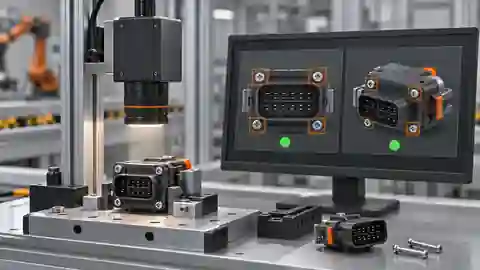
Accept and integrate visible assembly verification
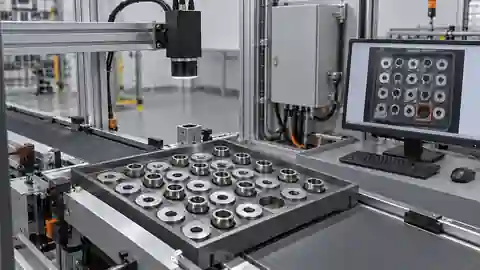
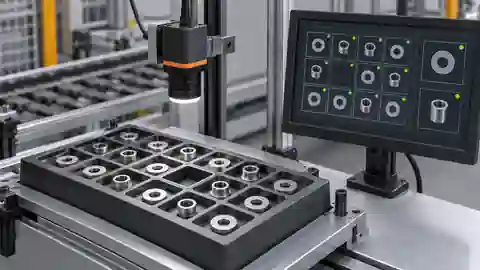
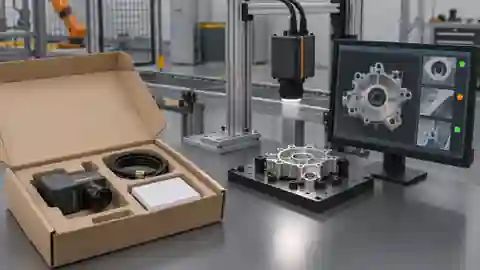
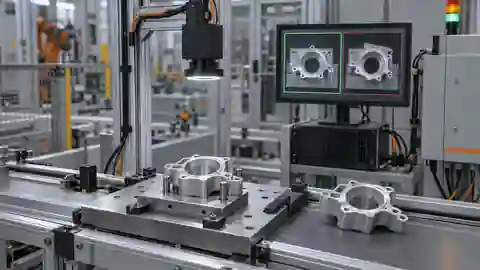
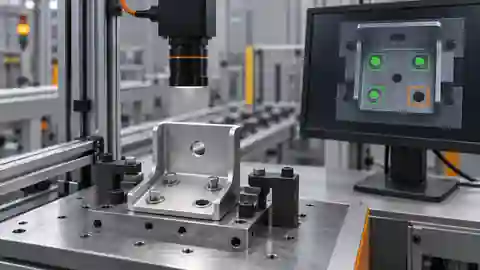
Test visible-part presence, spatial boundaries and event handoff with independent assemblies while keeping hidden mechanical properties outside scope.
Machine vision troubleshooting
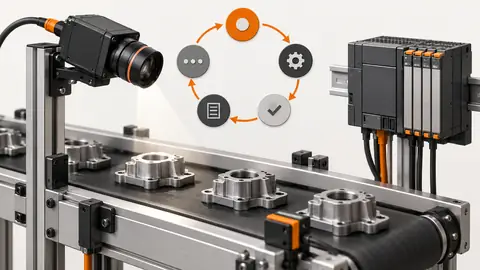
Trace image, algorithm and PLC handoffs with reproducible checks and saved evidence.
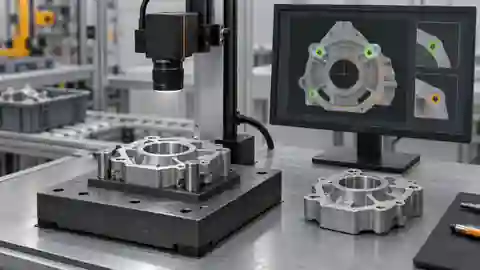
Test visible-part presence, spatial boundaries and event handoff with independent assemblies while keeping hidden mechanical properties outside scope.
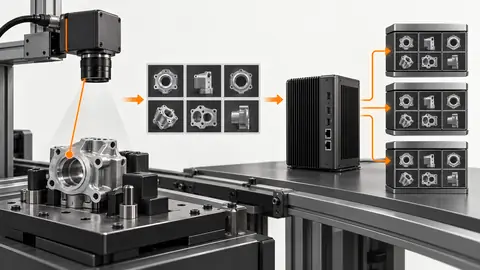
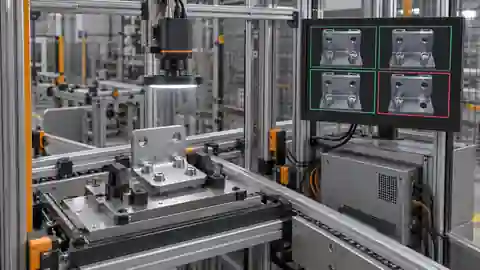
Use typed part evidence and explicit spatial rules; keep configured zone labels, trained detector candidates and mechanical quality claims separate.
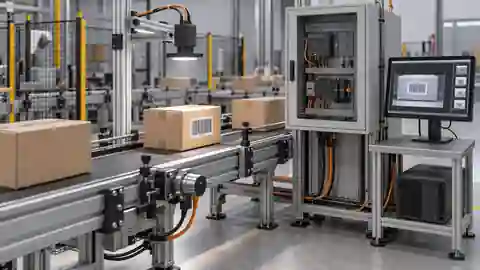
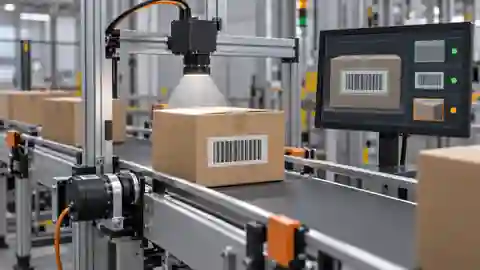
Carry each barcode event through decision delivery and the correct physical disposition, including no-read, late result and missed acknowledgement.
Separate symbol decoding, check-digit validation and product-master association so that a readable code cannot silently identify the wrong trade item.
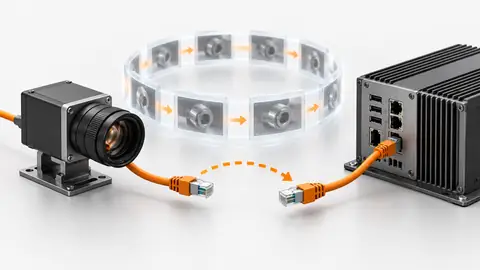
A grab loop can return valid frames yet leak buffers or reuse old images after reconnection. Confirm buffer lifetime and removal events in the actual SDK. The appendix below is vendor-neutral pseudocode, not executable SDK calls or a Deyi capability claim.
Validate exact physical counts with independent trays and explicit overlap handling, then tie each count to the correct tray event.
Compare a simple region-count baseline with an AI-assisted candidate, using exact counts and preserved overlap failures on development data.
Validate calibrated dimensions against independent artifacts, preserve invalid results and verify how units and tolerance decisions reach the line.
Use AI to review edge-processing candidates while keeping units, approved calibration and physical measurement acceptance outside automatic tuning.
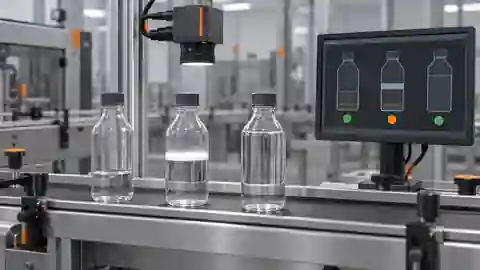
Freeze the visible-height claim, preserve review and missing results, and verify bottle-event handoff before accepting a station.
Keep the liquid-boundary result, validity state and image identity together while evaluating a saved-image workflow and an AI-proposed parameter change.
Saving a folder of failed images does not establish traceability. A useful record links each part decision to its image status, recipe and acquisition generation, even when the image cannot be saved.
Deliver a field-level verdict with traceable text and a deadline, keeping wrong text, unreadable text and communication failure distinct on the line.
Separate text detection, recognition and business-field validation, and preserve uncertain text instead of replacing it with the expected lot.
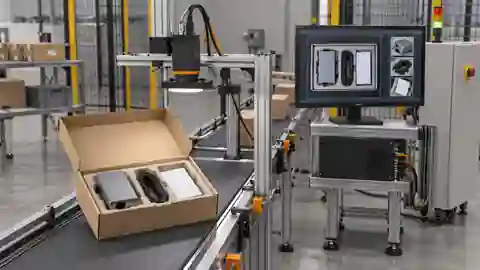
Verify visible kit quantities, ambiguity handling and recipe-event handoff using independent packages and a complete evidence denominator.
Compare visible typed item evidence with a versioned BOM, preserving unknown labels, occlusion and missing execution results.
Validate original-pixel localization separately from approved motion mapping; test ambiguous targets, stale results and physical pickup response.
Build a unique-target horizontal position check, compare AI-assisted candidates and preserve the limits of pixel coordinates and observability.
A short trigger pulse and an unacknowledged result can lose parts or reuse old decisions. Agree state behavior before mapping it to the actual electrical signals or industrial protocol. The appendix is conceptual pseudocode, not wire commands.
Validate missing-feature detection with independent parts, explicit review handling and part-linked outputs before a production handoff.
Build a presence baseline from visible components, compare AI-proposed changes on development samples and retain missing-feature failures.
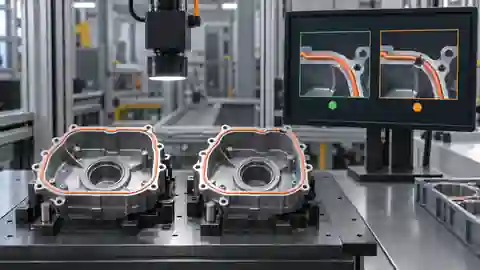
Accept visual decisions, complete event records and physical handling separately; a passing appearance result cannot certify leak tightness or adhesive strength.
Bind visible path coverage, gap evidence and Review states to source images; an AI proposal cannot turn appearance into leak or strength certification.
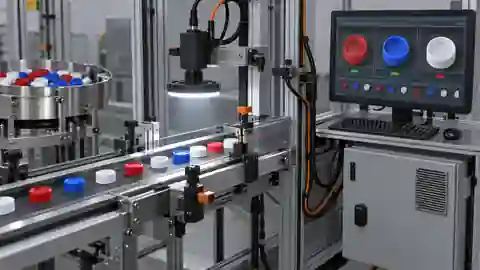
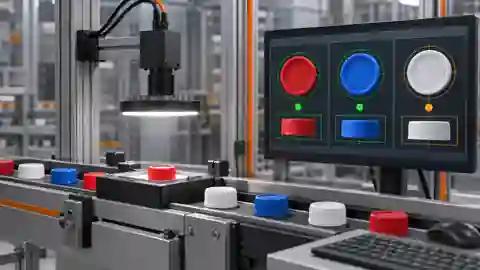
Evaluate known-class coverage, novel-item handling and physical route association separately rather than reporting one flattering color accuracy number.
Implement a color decision on a declared image format, while keeping semantic SKU recognition and approval of any cloud model separate.
Separate defect decisions from transport acknowledgements and physical rejection while freezing the surface reference and optical recipe for the acceptance run.
Build a registered reference-difference baseline and compare a bound candidate without turning anomaly scores or AI suggestions into confirmed defect answers.
A fast average algorithm does not prove that every part receives a timely decision. Measure the whole path under concurrent camera, processing and storage load, using the station’s actual decision deadline.
An exported camera configuration may not include thresholds, models, calibration or PLC mapping. Define the entire reproducible inspection set and identify what each manufacturer’s export actually preserves.
No tutorial titles match this search.
Engineering review
Send sample images, your current setup and the check that failed. Include field of view, working distance, line speed and acceptance criteria for a practical review.
Send samples for engineering review