Alternative selection guide

Allied Vision Camera Alternative

Use Allied Vision camera references to frame sensor size, interface, frame rate and machine vision application needs.

Deyi Vision is not affiliated with the compared brands. This page is for application-based selection and RFQ planning.
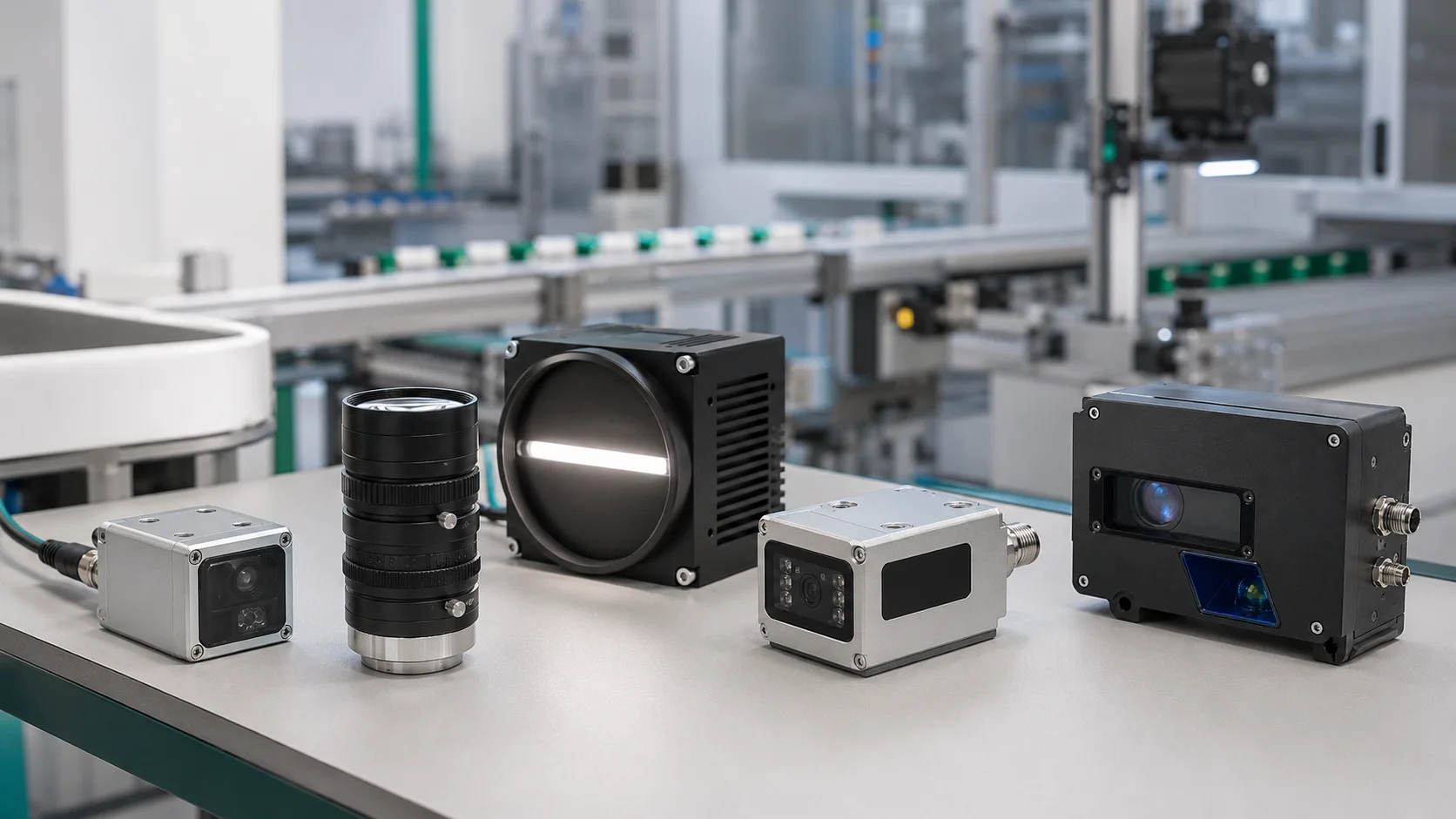
Allied Vision Camera Selection industrial machine vision comparison visual
Buyer requirement

When buyers compare this brand route.

Allied Vision Camera Selection requests usually mean buyers need to confirm area scan camera choice, gige and usb routes, integration constraints rather than choose one fixed replacement model.

Factory route

How Deyi maps the request.

Deyi Vision translates the reference into camera, lens, lighting, barcode reader, 3D or smart camera routes after reviewing sample images and production constraints.

RFQ evidence

What to send for a useful comparison.

Send current model, application photos, defect target, line speed, working distance, interface, trigger needs and budget constraints.

Comparison evidence boundary

Validate the application route, not a claimed one-to-one replacement.

Open paired case brief

Allied Vision camera route

Allied Vision cameras: compare the application contract, not only the camera body.

An Allied Vision camera reference establishes a useful starting point, but not a one-to-one replacement. Reconfirm sensor coverage, global or rolling shutter, frame rate, GigE or USB3 transport, trigger behavior, lens mount and software constraints against the production task.

Independent application-selection guidance only. Deyi Vision is not affiliated with IDS Imaging or Allied Vision and does not claim drop-in compatibility.

  • Reference baselineSend the Allied Vision model, current lens and required image result.
  • Six route inputsFOV, feature size, working distance, speed, interface and trigger.
  • Acceptance evidenceProvide good, bad and edge-case samples plus timing targets.

QR reading and inspection workflow

How to detect QR codes with Allied Vision cameras

Choose the processing architecture for the exact camera first. With an image-acquisition camera, Vimba X can supply images to an application that performs QR decoding. Allied Vision also offers Alecs smart cameras with onboard processing. The brand name alone therefore does not tell you whether an external PC is required.

Vimba X documents camera control and image acquisition; the application still needs its selected decoding logic. Alecs supports application software running on the camera. Confirm the sensor, software package, license and output integration for the chosen configuration rather than assuming all camera models ship with a ready-to-run QR reader.

  1. Specify the code and capture. Supply the QR type, smallest module, field of view, distance and conveyor speed. Use real labels to check lighting, exposure, motion blur, rotation and reflections.
  2. Choose where decoding runs. For a host route, acquire an image through the supported SDK and hand it to the decoder. For Alecs, validate the selected on-camera application and its result interface. Include missing-code and invalid-payload handling.
  3. Prove output timing. Measure the complete trigger-to-result path with production samples, including no-reads and edge cases. Confirm PLC signals, timeout behavior, reject timing and image logging on the actual system.

Defect detection with Allied Vision cameras

Begin with a defect definition and representative good, bad and borderline parts. Prove optical contrast before choosing rule-based inspection or a trained model. Keep evaluation samples separate from setup or training samples, and report false accepts, false rejects and decision time against agreed criteria. A camera specification does not demonstrate defect-detection accuracy. For a Deyi comparison, repeat the same test with the proposed camera, lens, lighting and processing route.

Compare smart-camera and PC-based processing or prepare a model-level camera comparison.

Official documentation and scope

The workflow above is selection guidance, not a measured read-rate or accuracy result. Official brand documentation supports the stated software architecture; it does not certify a Deyi replacement or imply brand affiliation.

Engineering comparison summary

Allied Vision Camera Selection should be evaluated through 5 Deyi component routes and 3 constraint groups.

Send comparison RFQ

Swipe horizontally to compare buyer question, Deyi route and evidence needed before quotation.

Decision factor Buyer question Deyi answer Evidence to send
Reference-model request What does "Allied Vision Camera Selection" usually need to confirm? Compare 3 requirement groups: area scan camera choice, gige and usb routes, integration constraints. Current model, target defect, sample images and why the current route is not enough.
Component route Which hardware family should be reviewed first? Start with Industrial 2D Cameras, Line Scan Cameras, 3D Vision Cameras, Smart Cameras before asking for 1 fixed replacement model. FOV, working distance, interface, line speed, trigger and mounting envelope.
Risk boundary What should not be assumed from the brand name? A brand reference does not prove lighting, optics, fixture, code-read angle, 3D height range or integration I/O. Good/bad samples, worst-case surface, tolerance table and read-rate or repeatability target.
RFQ outcome What should a useful reply contain? Expect a route-level answer with 2-4 candidate component families, open constraints and validation steps. Production photos, PLC/protocol needs, budget band, delivery country and acceptance criteria.
Comparison focus

Use this guide when engineering teams are comparing these constraints.

  • Area scan camera choice
  • GigE and USB routes
  • Integration constraints

Related selection guides

Validate the comparison with route-level engineering guides.

View all resources

Comparison RFQ

Send the competitor model or current inspection problem.

We will reply with the practical selection route, required constraints and questions to confirm before quoting.

Request engineering RFQ

Comparison FAQ

Clarify brand comparison before selecting hardware.

Ask engineering
How to detect QR codes with Allied Vision cameras?

Choose the processing architecture for the exact camera first. With an image-acquisition camera, Vimba X can supply images to an application that performs QR decoding. Allied Vision also offers Alecs smart cameras with onboard processing. The brand name alone therefore does not tell you whether an external PC is required.

Can a Allied Vision Camera Selection reference be treated as a drop-in camera replacement?

No. Preserve the application contract first: FOV, feature size, exposure, frame rate, interface, trigger, lens, lighting and software behavior. Deyi Vision provides an independent selection route and does not claim model-level compatibility or brand affiliation.

What should I send to compare a Allied Vision Camera Selection route?

Send the current camera and lens models, part and defect samples, FOV, smallest feature, working distance, line speed, exposure limit, cable length, trigger, host software and required output.

Is Allied Vision Camera Selection an official brand-reference page?

No. This is an independent factory-direct application-selection page. It helps engineering teams compare inspection requirements, component routes and RFQ inputs without claiming affiliation with the referenced brand.

What should I send if I already have a competitor model?

Send the model number, current application, part photos, defect or measurement target, line speed, working distance, interface needs and the reason you want another route.

Do I need a 2D or 3D machine vision system?

Use 2D when contrast, edges, labels or position are enough to judge the part. Use 3D when height, profile, gap, volume, weld shape or surface geometry decides pass or fail.

How should I choose machine vision lighting?

Start from the defect and material surface instead of the camera model. Backlight helps edge measurement, coaxial and dome lighting help reflective surfaces, and bar or ring lighting often works for general presence and defect checks.

Can Deyi Vision support projects that reference Keyence, Cognex or other brand routes?

Deyi Vision is not affiliated with those brands. As a factory-direct machine vision source, we can map the inspection goal, model reference and production route to a component-level camera, lens, light, reader or smart-camera selection.

Published parameters

Deyi-supported routes and published source specifications

Headline specifications for candidate families. Deyi route identifiers are mapped to the source models below; these are published specifications, not measured Deyi results or verified competitor equivalents. Confirm the current datasheet revision and supplied configuration before ordering.
Model Family Parameter Published value Source model and evidence
DY-GE307GM Industrial 2D Cameras Resolution / frame rate 2048 x 1536 MAX @37FPS MindVision: MV-GE307GM
manufacturer spec table reviewed; source revision not recorded here.
DY-GE307GM Industrial 2D Cameras Effective pixels 3MP MindVision: MV-GE307GM
manufacturer spec table reviewed; source revision not recorded here.
DY-GE307GM Industrial 2D Cameras Pixel size 3.4 x 3.4um MindVision: MV-GE307GM
manufacturer spec table reviewed; source revision not recorded here.
DY-GL8020 3D Vision Cameras Reference distance 20mm Phoskey: GL-8020
manufacturer spec table reviewed; source revision not recorded here.
DY-GL8020 3D Vision Cameras Z measuring range +/-2.3mm, F.S.=4.6mm Phoskey: GL-8020
manufacturer spec table reviewed; source revision not recorded here.
DY-GL8020 3D Vision Cameras X width near 9.6mm Phoskey: GL-8020
manufacturer spec table reviewed; source revision not recorded here.
DY-NV5 Smart Cameras Acquisition Up to 60fps image acquisition stated in official feature copy XS-Code: NV5
manufacturer feature evidence mapped; source revision not recorded here.
DY-FA0401C Machine Vision Lenses Focal length 4mm CHIOPT: FA0401C
manufacturer spec table reviewed; source revision not recorded here.
DY-FA0401C Machine Vision Lenses Sensor size 1/1.8 inch CHIOPT: FA0401C
manufacturer spec table reviewed; source revision not recorded here.
DY-FA0401C Machine Vision Lenses F.NO 2.0-C CHIOPT: FA0401C
manufacturer spec table reviewed; source revision not recorded here.
Contact

Direct RFQ contact

Talk to engineering about the inspection problem.

Send sample images, competitor model, FOV, working distance and line speed before model selection.

Target: selection brief within 24h
Send sample images