Application Guides

Reflective Metal Scratch Inspection Lighting Route

Select lighting for reflective metal scratch, burr and surface defect inspection by glare behavior, defect direction, camera angle and acceptance evidence.

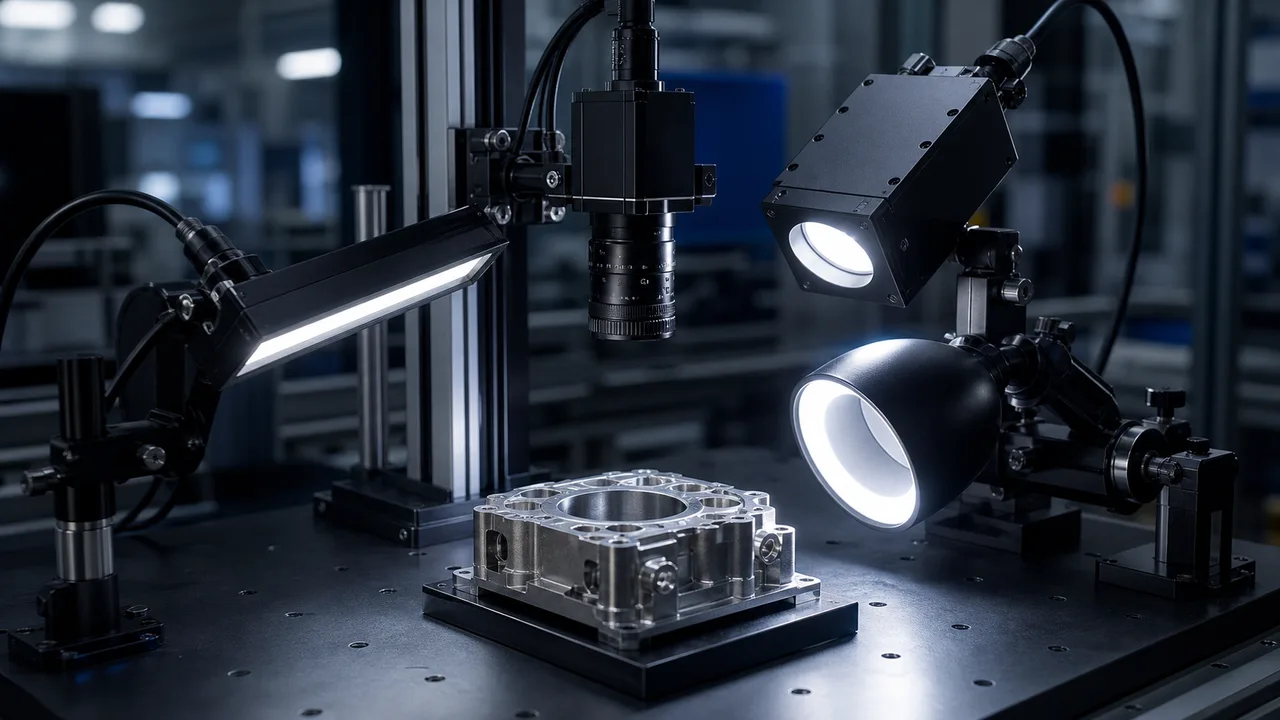
Reflective metal scratch inspection bench with industrial camera low angle bar light and shiny sample

Direct answer

Reflective Metal Scratch Inspection Lighting Route

Reflective metal scratch inspection usually fails when the light creates glare instead of defect contrast. Compare at least 3 routes: low-angle bar or dark-field for scratches, coaxial for flat marks and dome diffusion for curved glare.

Quick answer

What is the short answer for reflective metal scratch inspection lighting route?

Do not solve shiny metal by adding brightness. Control reflection geometry first, then choose camera resolution and threshold logic from real good, bad and borderline samples.

Quick answer

What should be confirmed before RFQ?

Scratch direction should be tested with low-angle lighting from more than one side.

Quick answer

What evidence should Deyi Vision review?

Acceptance should include borderline samples and batch finish variation.

Key takeaways

What this page should help engineering teams decide.

  • Glare control is the first decision for reflective metal.
  • Scratch direction should be tested with low-angle lighting from more than one side.
  • Acceptance should include borderline samples and batch finish variation.
Key point

Glare is a signal-design problem.

Polished, machined and stamped metal can look bright to the eye while hiding scratches from the camera. The lighting route should make the scratch or burr change brightness relative to the background, not simply raise the whole image.

Key point

Defect direction changes the best light angle.

A low-angle bar light may reveal scratches in one direction and miss perpendicular marks. Multi-angle tests are often needed before deciding whether dark-field, coaxial, dome or combined lighting is safer.

Key point

2D and 3D routes should be separated by evidence.

Use 2D when contrast proves the scratch or stain. Use 3D profile or laser routes when burr height, dent depth, gap or weld shape is the pass/fail evidence and contrast alone cannot separate good and bad parts.

Key point

Acceptance must include surface variation.

A metal surface inspection that works on one clean sample may fail after polishing, oil, batch finish or fixture position changes. The RFQ should include several good, bad and borderline pieces from real production.

Selection framework

Use this guide as a pre-RFQ decision filter, not as a part-number shortcut.

Machine vision selection is usually stable when the project starts from the inspection condition instead of a catalog model. Before requesting a quote, define what must be detected or measured, how the part moves, what surface behavior affects contrast and which factory constraint cannot change.

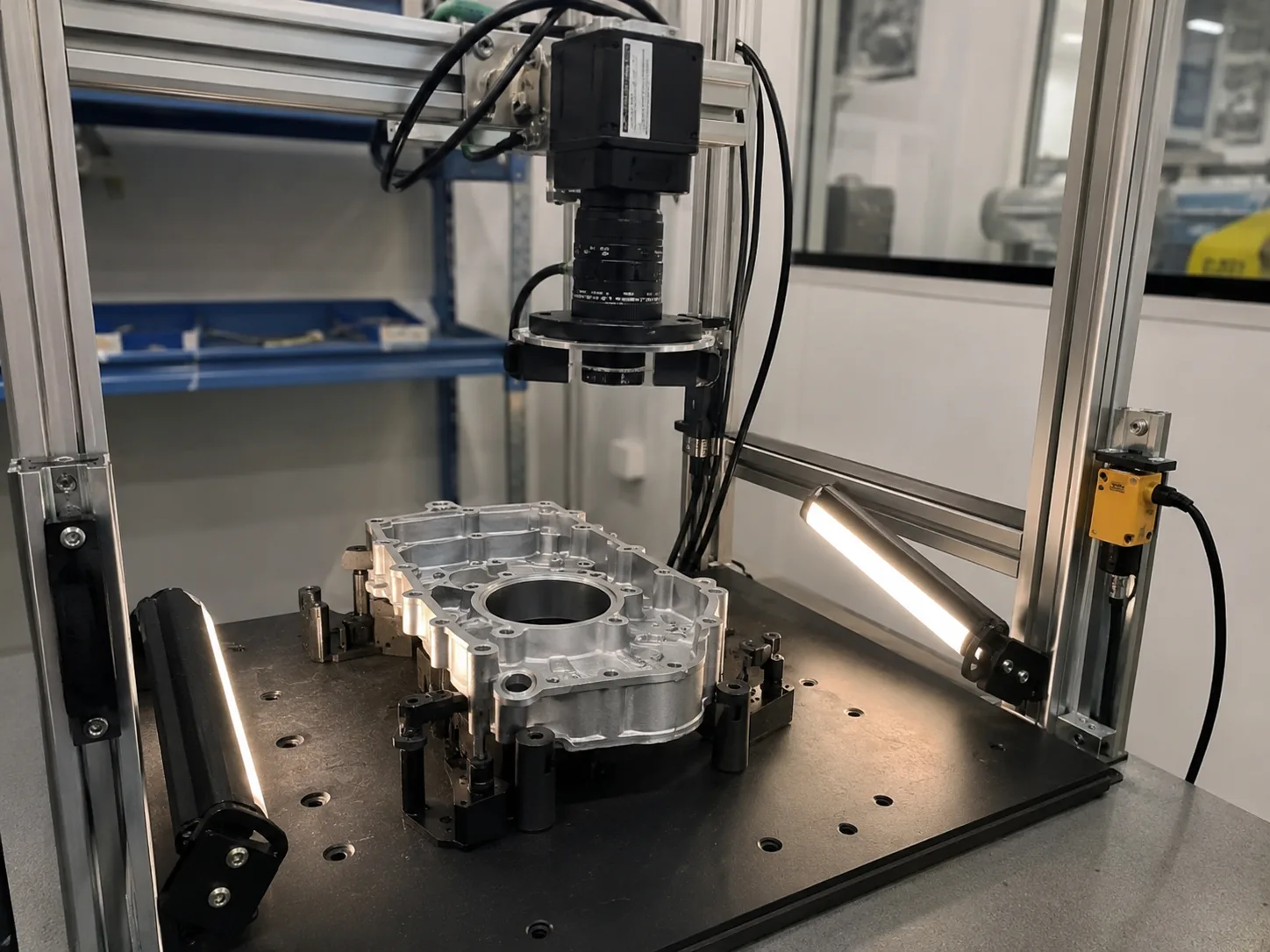
For reflective metal scratch inspection lighting route, the engineering team should translate the requirement into testable inputs: sample images, target tolerance, line speed, field of view, working distance, mounting envelope and the current failure mode. That gives the factory enough evidence to map the request to camera, lighting, optics, reader or 3D routes.
Decision matrix

Three checks before locking the route.

01

Low-angle bar or dark-field

Use for directional scratches, burrs and raised edges.

02

Coaxial light

Use for flatter reflective surfaces and camera-axis mark contrast.

03

Dome diffusion

Use when curved shiny parts create hard highlights that hide the target.

Comparison table

Use these data points to turn the concept into an RFQ-ready decision.

Factor Practical rule RFQ impact
Low-angle bar or dark-field Use for directional scratches, burrs and raised edges. Send defect direction, size and current glare images.
Coaxial light Use for flatter reflective surfaces and camera-axis mark contrast. Send flatness, working distance and sample marks.
Dome diffusion Use when curved shiny parts create hard highlights that hide the target. Confirm part size and available dome clearance.
3D profile Use when height, dent, burr or weld geometry is the acceptance rule. Send height tolerance and profile width.

Application proof

Related delivery routes that make this selection decision concrete.

View all cases

Common mistakes

Problems that slow down selection.

  • Selecting by model number before the inspection target is measurable.
  • Treating lighting as an accessory instead of the main contrast-control tool.
  • Ignoring fixture stability, part variation and operator maintenance workflow.

Factory handoff

What Deyi Vision reviews after receiving the project details.

The factory route review starts by checking whether the image can be made stable with lighting and fixture control. Then the camera, lens, reader or 3D sensor route is sized against speed, resolution, interface and installation constraints.

If you already have a Keyence, Cognex, Basler, OPT, LMI, Hikrobot or barcode-reader reference, include it as a benchmark. Deyi Vision uses the reference to understand the application class; final selection still depends on real samples and production limits.

Guide to RFQ

Have a real part, sample image or production constraint?

Use the guide to frame the question, then send the details so engineering can recommend a route.

Request engineering RFQ

Guide FAQ

Questions related to reflective metal scratch inspection lighting route.

Ask engineering
What is the best lighting for reflective metal scratch inspection?

There is no universal best light. Low-angle or dark-field lighting often reveals scratches, coaxial can help flat reflective marks, and dome diffusion can reduce harsh highlights on curved parts.

Why does a reflective metal inspection pass in the lab but fail on the line?

Surface finish, oil, part angle, fixture movement, light warm-up and batch variation can change reflections, so acceptance must test real production variation.

What should I send for a metal surface inspection RFQ?

Send good, bad and borderline samples, defect size and direction, surface finish, FOV, working distance, line speed, current lighting images and false reject tolerance.

Contact

Direct RFQ contact

Talk to engineering about the inspection problem.

Send sample images, competitor model, FOV, working distance and line speed before model selection.

Target: selection brief within 24h
Catch Defects First