Application Guides

Flexible Feeder Robot Loading for Small Parts

Plan flexible feeder robot loading for screws, terminals, contacts and small molded parts by part behavior, tray route, vision positioning and pickup repeatability.

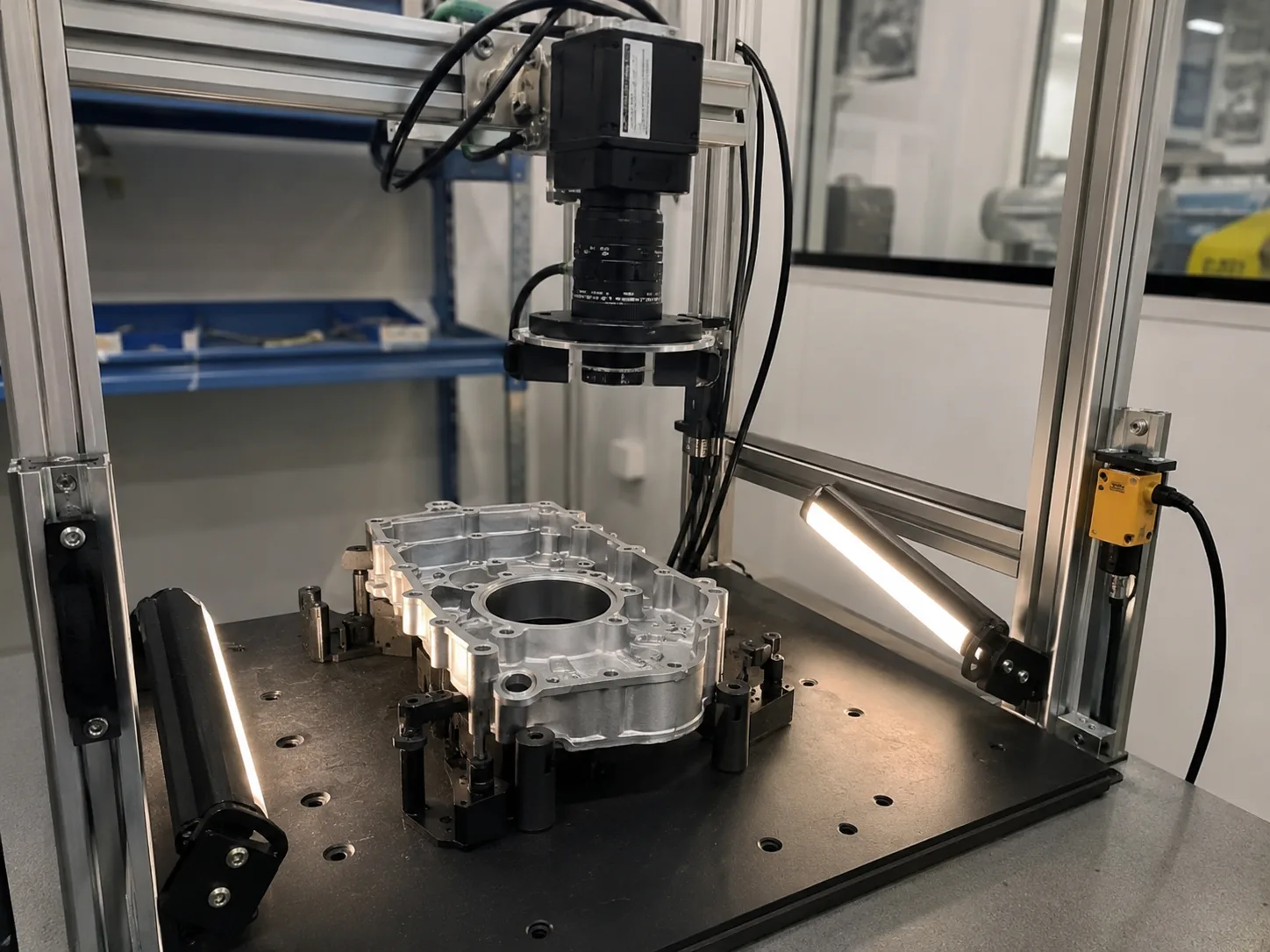
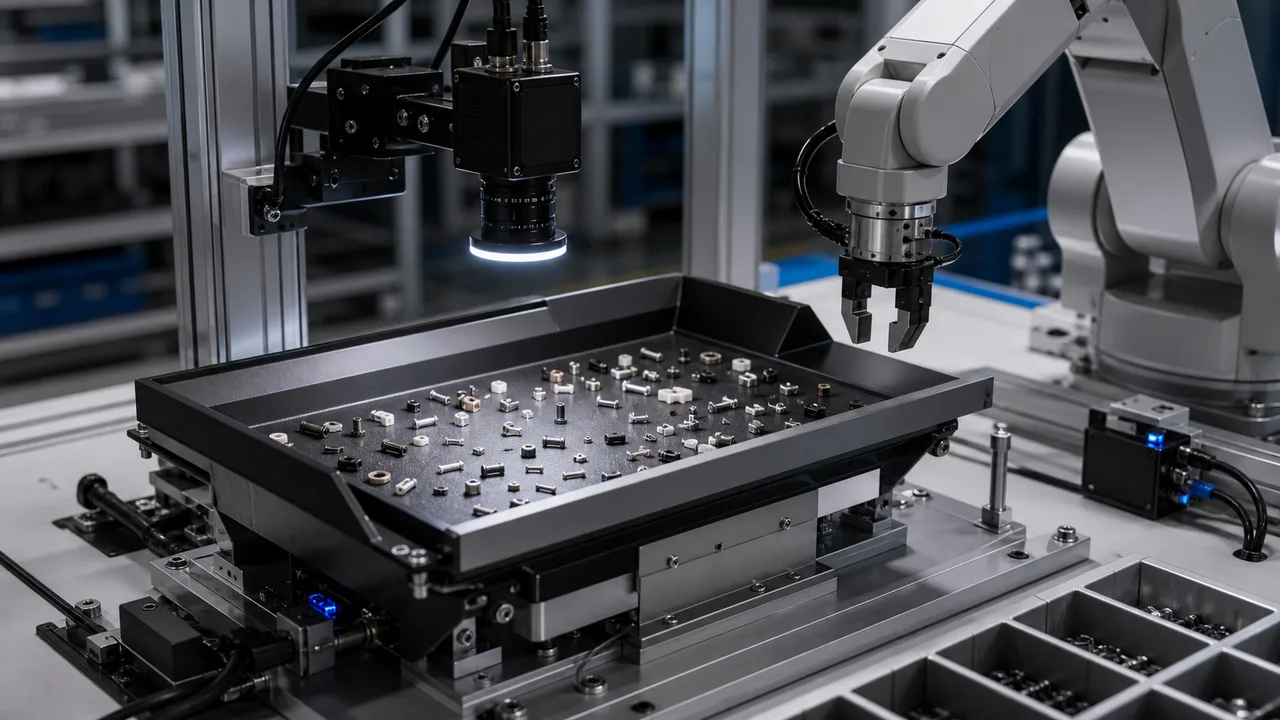
Flexible feeder robot loading cell with small loose parts overhead camera and robot pickup route

Direct answer

Flexible Feeder Robot Loading for Small Parts

Use flexible feeder robot loading when small parts change SKU, orientation or batch behavior too often for a fixed bowl feeder. Start with 5 inputs: part size, material, sticking or rolling risk, target cycle time and robot pickup tolerance.

Quick answer

What is the short answer for flexible feeder robot loading for small parts?

Flexible feeder selection is a handling problem first. The feeder, tray surface, overhead camera, pickup tool and robot tolerance must be tested with real loose parts before the route is locked.

Quick answer

What should be confirmed before RFQ?

Part sticking, rolling and nesting decide the tray route before model size.

Quick answer

What evidence should Deyi Vision review?

Vision pickup must prove repeatability before takt-time promises.

Key takeaways

What this page should help engineering teams decide.

  • Use flexible feeding when SKU changes make fixed tooling expensive.
  • Part sticking, rolling and nesting decide the tray route before model size.
  • Vision pickup must prove repeatability before takt-time promises.
Key point

Start from part behavior, not feeder size.

Small screws, terminals, connector contacts and molded parts can stick, roll, overlap, flip or nest. A feeder that looks large enough can still fail if tray material and vibration pattern do not separate the real parts.

Key point

Vision positioning turns random spread into robot coordinates.

An overhead industrial camera or smart-camera route should locate enough pickable parts after each vibration cycle. The acceptance metric is not only tray coverage; it is stable coordinates, part angle and robot pickup success.

Key point

Cycle time must include vibration, image capture and pickup.

Buyers often quote only robot movement time. A realistic takt estimate also includes part spreading, settle time, exposure, image processing, gripper approach, failed picks and occasional tray clearing.

Key point

A workstation route reduces integration risk.

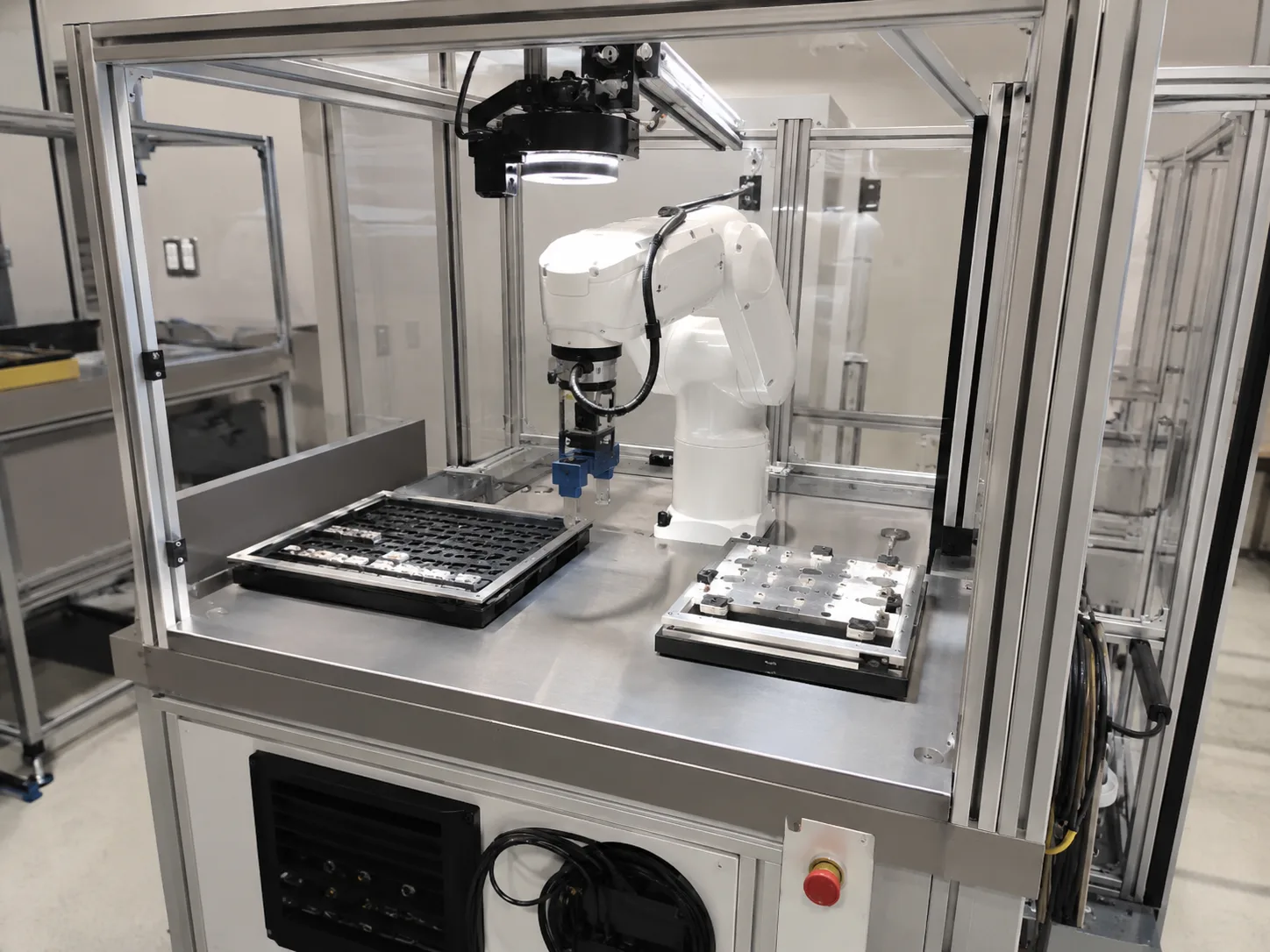
When the buyer needs feeder, storage bin, camera, 4-axis motion, I/O and handoff as one cell, a DTA-style workstation is safer than a feeder-only purchase. It gives engineering a defined route for sample tests and acceptance.

Selection framework

Use this guide as a pre-RFQ decision filter, not as a part-number shortcut.

Machine vision selection is usually stable when the project starts from the inspection condition instead of a catalog model. Before requesting a quote, define what must be detected or measured, how the part moves, what surface behavior affects contrast and which factory constraint cannot change.

For flexible feeder robot loading for small parts, the engineering team should translate the requirement into testable inputs: sample images, target tolerance, line speed, field of view, working distance, mounting envelope and the current failure mode. That gives the factory enough evidence to map the request to camera, lighting, optics, reader or 3D routes.
Decision matrix

Three checks before locking the route.

01

Fixed bowl feeder

Use when one stable part geometry runs at high volume for a long time.

02

Flexible feeder

Use when small parts need configurable spread, vision location and robot pickup.

03

Tray route

Choose anti-stick, anti-roll, profile, grid or flat trays from real part behavior.

Comparison table

Use these data points to turn the concept into an RFQ-ready decision.

Factor Practical rule RFQ impact
Fixed bowl feeder Use when one stable part geometry runs at high volume for a long time. Risk increases when SKU variation or product changes are frequent.
Flexible feeder Use when small parts need configurable spread, vision location and robot pickup. Send part photos, weight, size range, cycle target and surface notes.
Tray route Choose anti-stick, anti-roll, profile, grid or flat trays from real part behavior. Prevents selecting a feeder size that cannot present the part.
Robot handoff Validate pickup pose, gripper clearance and repeatability before cycle-time claims. Share robot model, end effector and target takt time.

Application proof

Related delivery routes that make this selection decision concrete.

View all cases

Common mistakes

Problems that slow down selection.

  • Selecting by model number before the inspection target is measurable.
  • Treating lighting as an accessory instead of the main contrast-control tool.
  • Ignoring fixture stability, part variation and operator maintenance workflow.

Factory handoff

What Deyi Vision reviews after receiving the project details.

The factory route review starts by checking whether the image can be made stable with lighting and fixture control. Then the camera, lens, reader or 3D sensor route is sized against speed, resolution, interface and installation constraints.

If you already have a Keyence, Cognex, Basler, OPT, LMI, Hikrobot or barcode-reader reference, include it as a benchmark. Deyi Vision uses the reference to understand the application class; final selection still depends on real samples and production limits.

Guide to RFQ

Have a real part, sample image or production constraint?

Use the guide to frame the question, then send the details so engineering can recommend a route.

Request engineering RFQ

Guide FAQ

Questions related to flexible feeder robot loading for small parts.

Ask engineering
When should I use a flexible feeder for robot loading?

Use it when parts are small, loose, frequently changed or hard to orient with a fixed bowl feeder, and when a vision-guided robot can pick from a spread tray.

What makes flexible feeder robot loading fail?

Common causes are sticking parts, nested parts, poor tray material, unstable lighting, weak part localization, gripper clearance and takt-time estimates that ignore vibration and failed picks.

What should I send for a flexible feeder RFQ?

Send part size, weight, material, photos or video of loose parts, target cycle time, SKU list, robot model, gripper concept, tray space and current loading problem.

Contact

Direct RFQ contact

Talk to engineering about the inspection problem.

Send sample images, competitor model, FOV, working distance and line speed before model selection.

Target: selection brief within 24h
Catch Defects First