
When buyers compare this brand route.
IDS Imaging Camera Selection requests usually mean buyers need to confirm usb industrial cameras, compact inspection cells, software and trigger needs rather than choose one fixed replacement model.
Alternative selection guide
Map IDS Imaging-style camera searches to inspection goals, optics, lighting and direct-supply RFQ inputs.
Deyi Vision is not affiliated with the compared brands. This page is for application-based selection and RFQ planning.
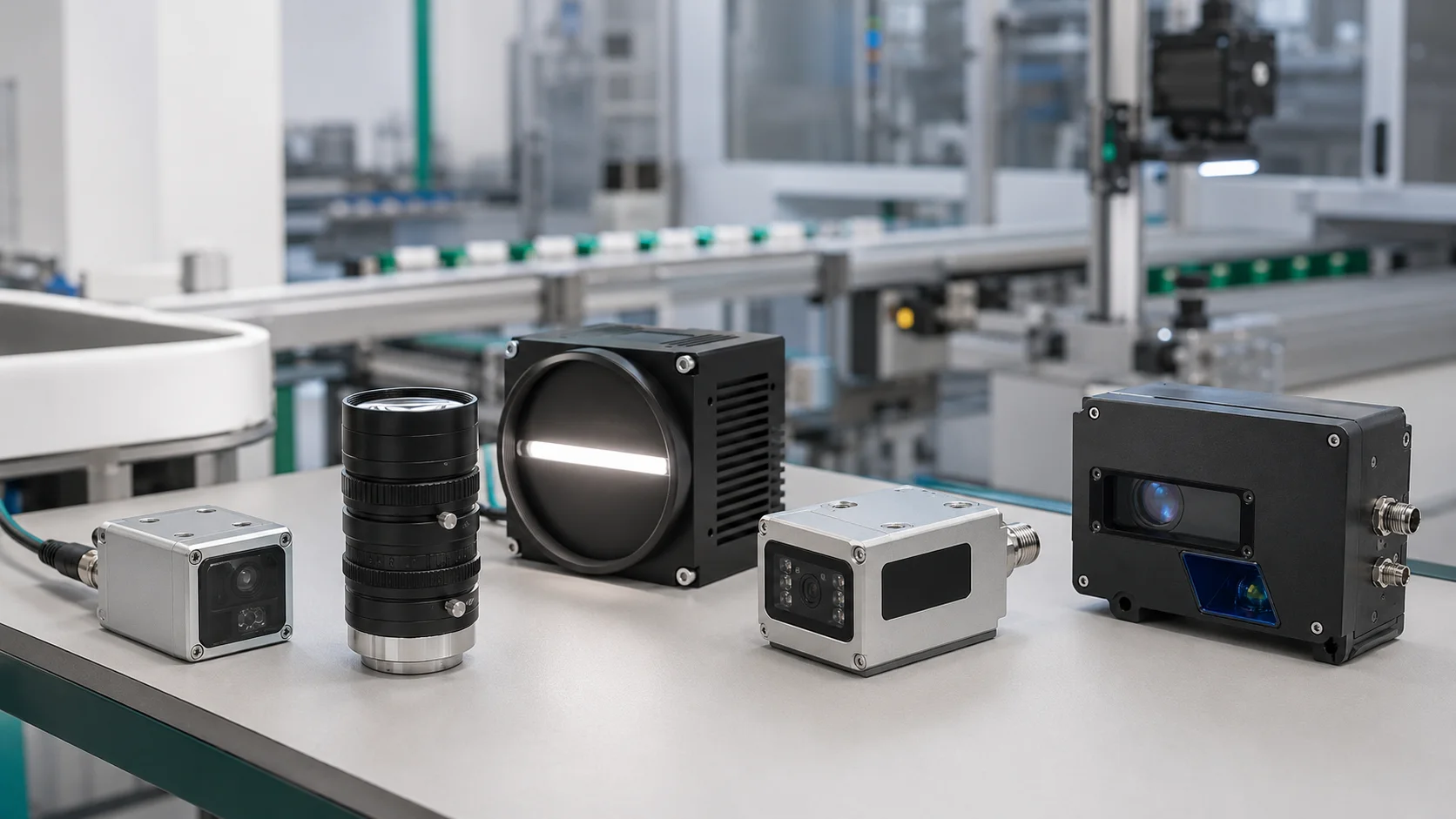
IDS Imaging Camera Selection requests usually mean buyers need to confirm usb industrial cameras, compact inspection cells, software and trigger needs rather than choose one fixed replacement model.
Deyi Vision translates the reference into camera, lens, lighting, barcode reader, 3D or smart camera routes after reviewing sample images and production constraints.
Send current model, application photos, defect target, line speed, working distance, interface, trigger needs and budget constraints.
A comparison that cannot say this is an advertisement. These are the cases where the component route costs you more than it saves, and they are worth checking before you send an inquiry.
Comparison evidence boundary
IDS Imaging camera route
An IDS Imaging camera search is usually a request to preserve image quality, capture timing or software behavior. Match resolution, sensor format, shutter, USB3 or GigE interface, trigger I/O and lens mount before comparing a Deyi-supported route.
Independent application-selection guidance only. Deyi Vision is not affiliated with IDS Imaging or Allied Vision and does not claim drop-in compatibility.
Compare area-scan, USB3, GigE, trigger and sensor routes.
Related engineering route Machine vision lensesMatch sensor format, FOV and working distance before camera lock.
Related engineering route Machine vision lightingProve defect contrast and exposure margin on real samples.
Related engineering route Camera supplier checklistPrepare the optical, timing and interface evidence needed for RFQ.
Camera IDS query clarification
Search results also use camera ID for a device identifier in software. If that is the task, use the current vendor SDK documentation. For an IDS Imaging comparison, preserve six application constraints first: FOV, smallest feature, exposure, interface, trigger and lens coverage.
Official IDS pages publish USB, GigE and 10 GigE families, including compact 29 x 29 x 17 mm examples and higher-bandwidth routes up to 10 Gbit/s. These are reference boundaries, not performance claims for a Deyi-supported camera.
USB, GigE and 10 GigE camera families, housing formats and published camera constraints.
Application requirements, standards, form factor and implementation quality as selection boundaries.
Generic camera programming across common machine-vision transport technologies.
Engineering comparison summary
Swipe horizontally to compare buyer question, Deyi route and evidence needed before quotation.
| Decision factor | Buyer question | Deyi answer | Evidence to send |
|---|---|---|---|
| Reference-model request | What does "IDS Imaging Camera Selection" usually need to confirm? | Compare 3 requirement groups: usb industrial cameras, compact inspection cells, software and trigger needs. | Current model, target defect, sample images and why the current route is not enough. |
| Component route | Which hardware family should be reviewed first? | Start with Industrial 2D Cameras, Machine Vision Lenses, Machine Vision Lighting before asking for 1 fixed replacement model. | FOV, working distance, interface, line speed, trigger and mounting envelope. |
| Risk boundary | What should not be assumed from the brand name? | A brand reference does not prove lighting, optics, fixture, code-read angle, 3D height range or integration I/O. | Good/bad samples, worst-case surface, tolerance table and read-rate or repeatability target. |
| RFQ outcome | What should a useful reply contain? | Expect a route-level answer with 2-4 candidate component families, open constraints and validation steps. | Production photos, PLC/protocol needs, budget band, delivery country and acceptance criteria. |
Related selection guides
Translate a Basler, Allied Vision, Baumer, IDS or Teledyne datasheet into the four values that decide whether another camera fits: sensor format, pixel size, interface and shutter.
ResourceEvaluate a machine vision camera supplier by application review quality, sample evidence, optical route support and integration handoff.
ResourceChoose GigE when the camera is far from the host, the cell is distributed or industrial network routing matters. Choose USB3 when the camera is close to the host and the application needs short-cable high-bandwidth acquisition with controlled cable routing.
ResourceSelect industrial cameras for machine vision by sensor size, shutter type, resolution, interface, frame rate and lighting constraints.
ResourceCompare industrial cameras and regular cameras by trigger control, lens route, interfaces, repeatability and factory integration.
Comparison RFQ
We will reply with the practical selection route, required constraints and questions to confirm before quoting.
Request engineering RFQComparison FAQ
No. Deyi Vision is not affiliated with IDS Imaging. The names IDS, uEye and IDS NXT are used here only to identify systems that buyers already have installed. No Deyi camera is automatically interchangeable with an IDS model. Each position has to be checked separately against the inspection goal, sensor and resolution needs, optics, interface, trigger wiring and the application software before any change.
Not by itself. With IDS NXT, the inference runs on the camera. A bare industrial 2D camera only captures and transmits images. To use a Deyi camera there, the inference would have to move to a PC or controller that the integrator owns. The model would also have to be redeployed, and the results would need to be revalidated on real parts. If that work is not justified, keep the IDS NXT system.
The uEye SDK calls do not carry over to a different camera. Acquisition, parameter, trigger and event code must be ported to the replacement camera's SDK or interface. The ported application must then pass regression tests. List every SDK function the application uses before deciding. If nobody has the capacity or authority to port and requalify the software, staying with the installed IDS cameras is the safer choice.
Keep the installed IDS cameras in two cases. The first is when the application depends on the uEye SDK or on IDS NXT on-camera inference. The second is when the project relies on IDS lifecycle commitment and European support across an installed base already in the field. Mixing camera families in one fleet also adds spare-part handling and separate validation for each variant. A change makes most sense for new compact cells or redesigned stations, where the camera, lens and lighting are qualified together.
| Model | Family | Parameter | Published value |
|---|---|---|---|
| DY-GE307GM | Industrial 2D Cameras | Resolution / frame rate | 2048 x 1536 MAX @37FPS |
| DY-GE307GM | Industrial 2D Cameras | Effective pixels | 3MP |
| DY-GE307GM | Industrial 2D Cameras | Pixel size | 3.4 x 3.4um |
| DY-FA0401C | Machine Vision Lenses | Focal length | 4mm |
| DY-FA0401C | Machine Vision Lenses | Sensor size | 1/1.8 inch |
| DY-FA0401C | Machine Vision Lenses | F.NO | 2.0-C |
| DY-RS3475-W | Machine Vision Lighting | Power | 2W |
| DY-RS3475-W | Machine Vision Lighting | Light opening | 34mm outer / 10mm inner / 19mm height |
| DY-RS3475-W | Machine Vision Lighting | Color temperature | 6000-10000K |