Selection Guides

What Is a Telecentric Lens?

Decide when telecentric optics are justified by measurement tolerance, part height variation and fixture repeatability.

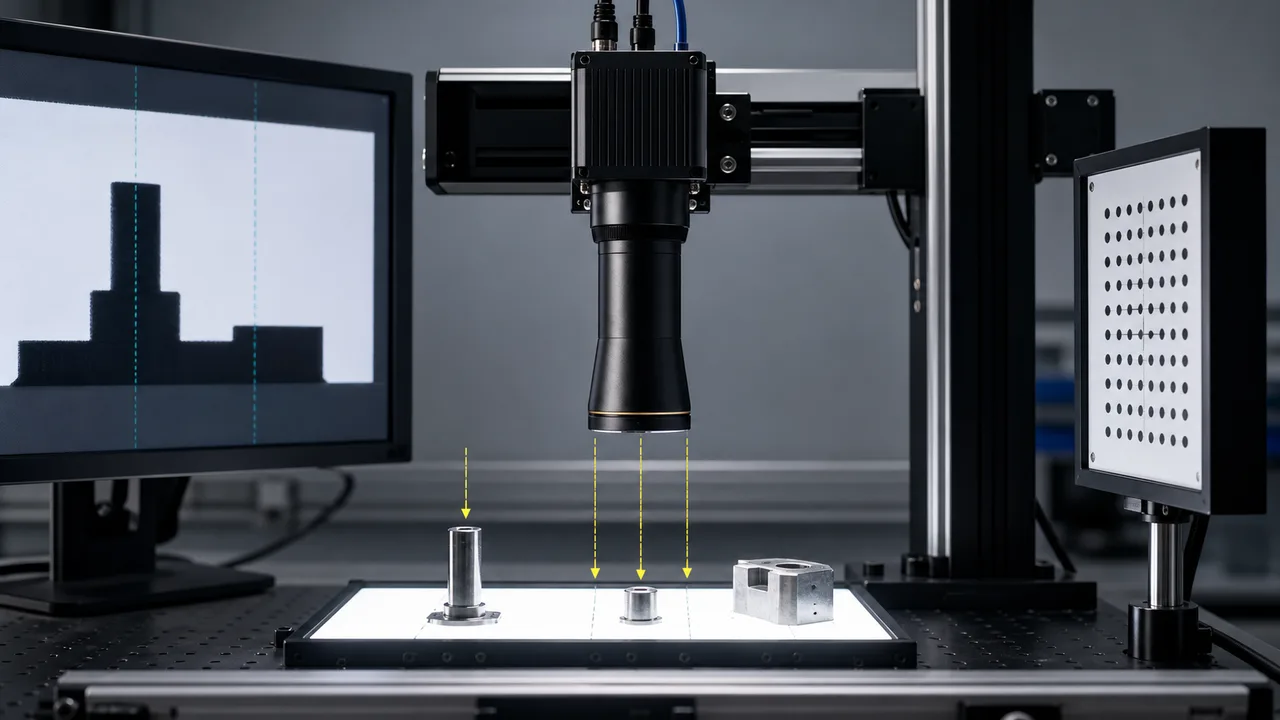
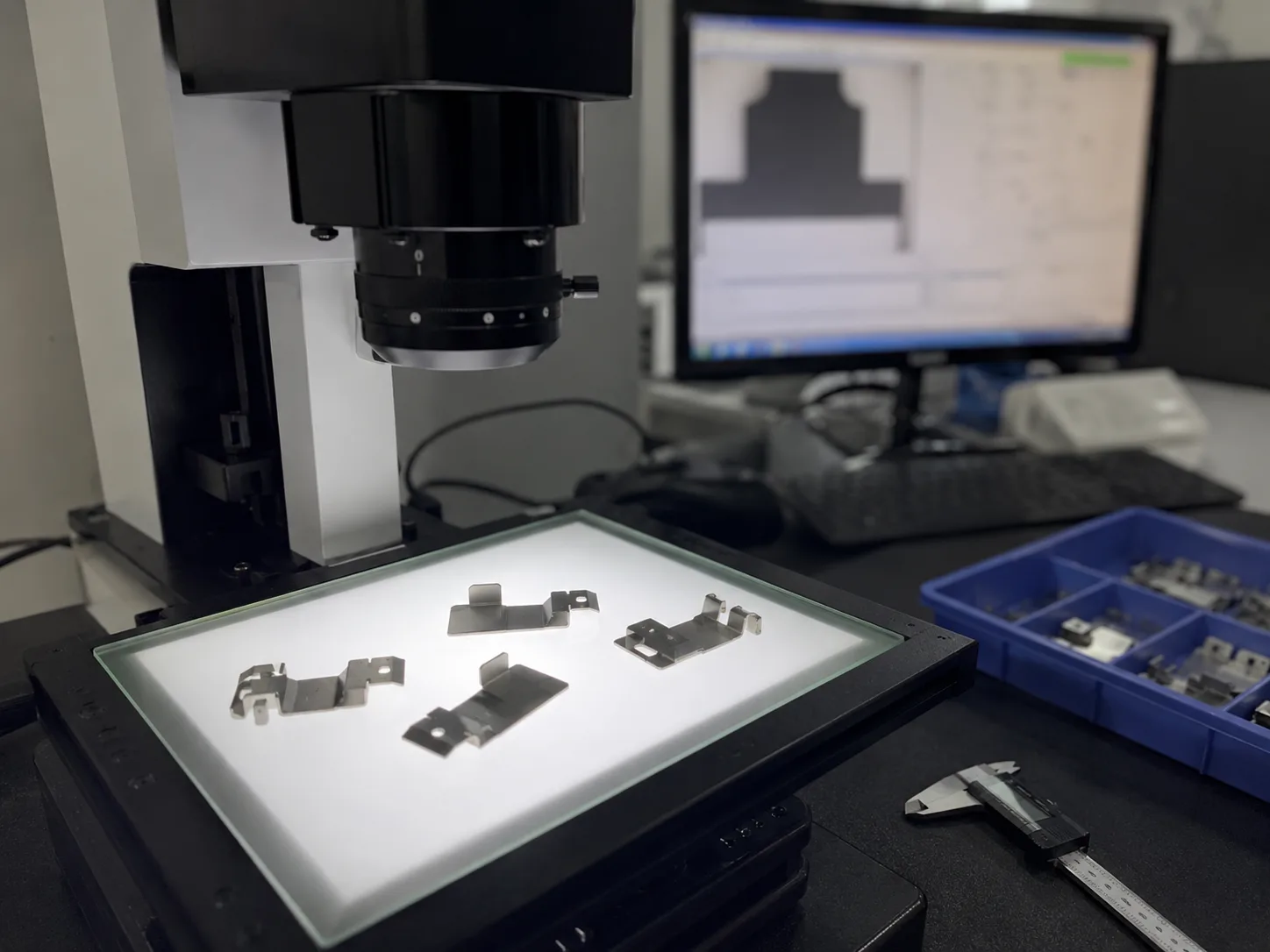
Telecentric lens measurement bench with industrial camera backlight calibration target and machined samples

Direct answer

What Is a Telecentric Lens?

A telecentric lens is justified when perspective error from part height or position changes can alter the measurement result. Use it for gauge-style edge, hole, gap and diameter inspection only when tolerance risk supports the cost and size.

Where this matters

Telecentric optics are justified by measurement repeatability.

Use a telecentric lens when perspective error from part height or position would change the measurement result, especially for edges, holes, pins, gaps and diameters.

Why projects fail

Telecentric lenses do not fix every inspection problem.

They reduce perspective error, but they do not solve weak edge contrast, loose fixtures, poor lighting or a tolerance that has not been defined.

RFQ preparation

Send the measurement geometry before lens selection.

Provide object size, tolerance, height variation, sensor size, working distance, mechanical clearance, lighting route and sample edge photos.

What engineering should check

What this page should help teams decide.

  • Telecentric lenses reduce perspective error.
  • They are valuable for measurement, not every inspection.
  • Object size, sensor size and working distance must align.
Practical note

Telecentric optics protect measurement geometry.

A regular lens changes apparent size when the part moves closer or farther from the camera. Telecentric optics reduce that perspective shift for edges, holes, pins, gaps and diameters where a few pixels can change pass/fail.

Practical note

The lens is justified by tolerance, not by prestige.

If the inspection target is only presence, label checking or a large visual defect, a standard FA lens may be the practical route. Telecentric cost is justified when part height variation, fixture tolerance or Z-position change would create measurement error.

Practical note

Field of view and working distance must fit together.

Telecentric lenses are less forgiving than ordinary lenses. Object size, sensor size, magnification, working distance and mechanical clearance should be checked as one set before model selection.

Practical note

Backlight and fixture stability still decide the result.

A telecentric lens does not fix weak contrast or loose fixturing. Measurement projects should test the lens with the real edge, backlight route, exposure, threshold method and production fixture before acceptance.

How to test before buying

Verify edge contrast and fixture stability with the lens route.

Test the telecentric lens with the intended backlight or surface light, real part height variation and the final threshold method before accepting the measurement route.

Decision checks

Three checks before locking the route.

01

Part height variation

Use telecentric optics when Z variation changes apparent size with a normal lens.

02

Measurement tolerance

Telecentric is safer when the acceptance rule depends on a small edge, hole, diameter or gap tolerance.

03

FOV and sensor size

Object-side FOV and camera sensor must match the lens magnification.

Decision table

Use these data points to turn the concept into an RFQ-ready decision.

Factor Practical rule RFQ impact
Part height variation Use telecentric optics when Z variation changes apparent size with a normal lens. Send expected part height range, tolerance and fixture repeatability.
Measurement tolerance Telecentric is safer when the acceptance rule depends on a small edge, hole, diameter or gap tolerance. Send tolerance, target feature and required repeatability.
FOV and sensor size Object-side FOV and camera sensor must match the lens magnification. Send full part size, required measured area and camera model if fixed.
Lighting route Backlight is common for silhouette measurement; coaxial or structured lighting may be needed for surface marks. Send target feature photos and whether top-surface detail matters.
Cost control Use a regular low-distortion lens when perspective error is not the limiting factor. Prevents over-specifying optics for simple inspection.

Application proof

Related delivery routes that make this selection decision concrete.

View all cases

Common mistakes

Problems that slow down selection.

  • Choosing telecentric optics for prestige instead of a real perspective-error limit.
  • Quoting without sensor format, magnification and working-distance constraints.
  • Assuming the lens fixes weak edge contrast or unstable fixturing.

Factory handoff

What Deyi Vision reviews after receiving the project details.

The factory route review starts by checking whether the image can be made stable with lighting and fixture control. Then the camera, lens, reader or 3D sensor route is sized against speed, resolution, interface and installation constraints.

If you already have a Keyence, Cognex, Basler, OPT, LMI, Hikrobot or barcode-reader reference, include it as a reference model. Deyi Vision uses it to understand the application class; final selection still depends on real samples and production limits.

Guide to RFQ

Have a real part, sample image or production constraint?

Use the guide to frame the question, then send the details so engineering can recommend a route.

Request engineering RFQ

Guide FAQ

Questions related to what is a telecentric lens?.

Ask engineering
What is a telecentric lens used for in machine vision?

It is used for repeatable dimensional inspection where perspective error from part height or position changes would affect the measurement.

Is a telecentric lens always better than a regular lens?

No. It is better for measurement stability, but it is larger, more expensive and less flexible. For presence, label or general defect inspection, a regular low-distortion lens may be enough.

What information is needed to select a telecentric lens?

Send object size, sensor size, working distance, tolerance, part height variation, target edge or feature, lighting condition and fixture constraints.

Contact

Direct RFQ contact

Talk to engineering about the inspection problem.

Send sample images, competitor model, FOV, working distance and line speed before model selection.

Target: selection brief within 24h
Send sample images