
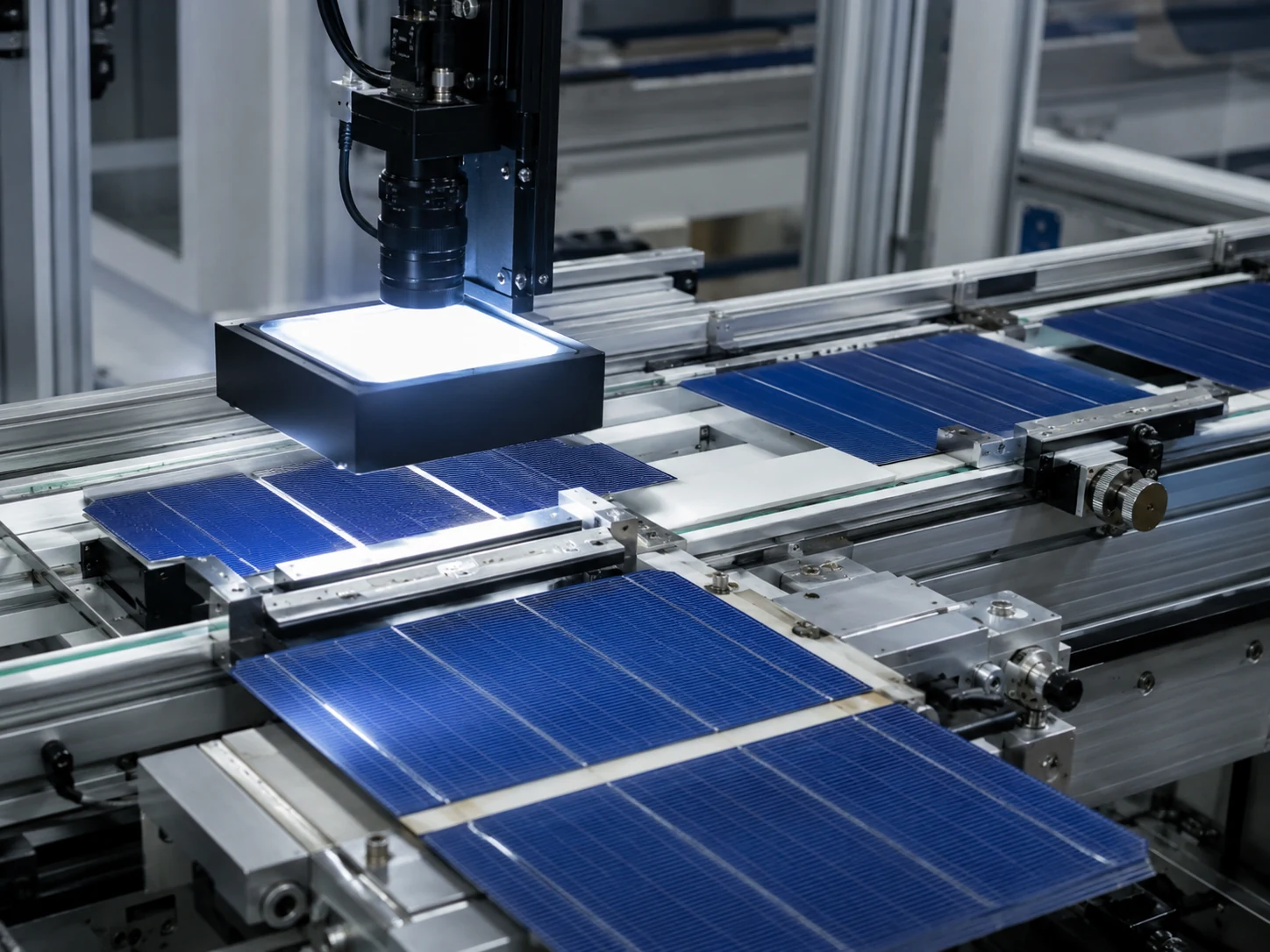
What the system should handle in this environment.
- Large-area imaging
- Fine defect visibility
- Stable lighting over reflective surfaces
Industry application
Machine vision routes for cell edge, coating, alignment, crack, print and module assembly inspection.
Related solutions
Build automated visual inspection systems for defect detection, presence checks, surface inspection, orientation, measurement and repeatable pass/fail output.
SolutionPlan a complete vision inspection system for defect checks, presence, measurement, barcode reading and pass/fail output.
Industry RFQ
Send part images, sample defects, line speed, target accuracy and current station constraints.
Request engineering RFQIndustry FAQ
Review the production environment and failure mode first: Large-area imaging, Fine defect visibility, Stable lighting over reflective surfaces. Then map those needs to camera, lens, lighting, 3D, smart camera or barcode reader routes.
Send part photos or drawings, target defect or measurement goal, field of view, working distance, line speed, accuracy target, lighting limits and any current camera, lens, light, barcode reader or competitor model.
Use 2D when contrast, edges, labels or position are enough to judge the part. Use 3D when height, profile, gap, volume, weld shape or surface geometry decides pass or fail.
Start from the defect and material surface instead of the camera model. Backlight helps edge measurement, coaxial and dome lighting help reflective surfaces, and bar or ring lighting often works for general presence and defect checks.
Deyi Vision is not affiliated with those brands. As a factory-direct machine vision source, we can map the inspection goal, model reference and production route to a component-level camera, lens, light, reader or smart-camera selection.